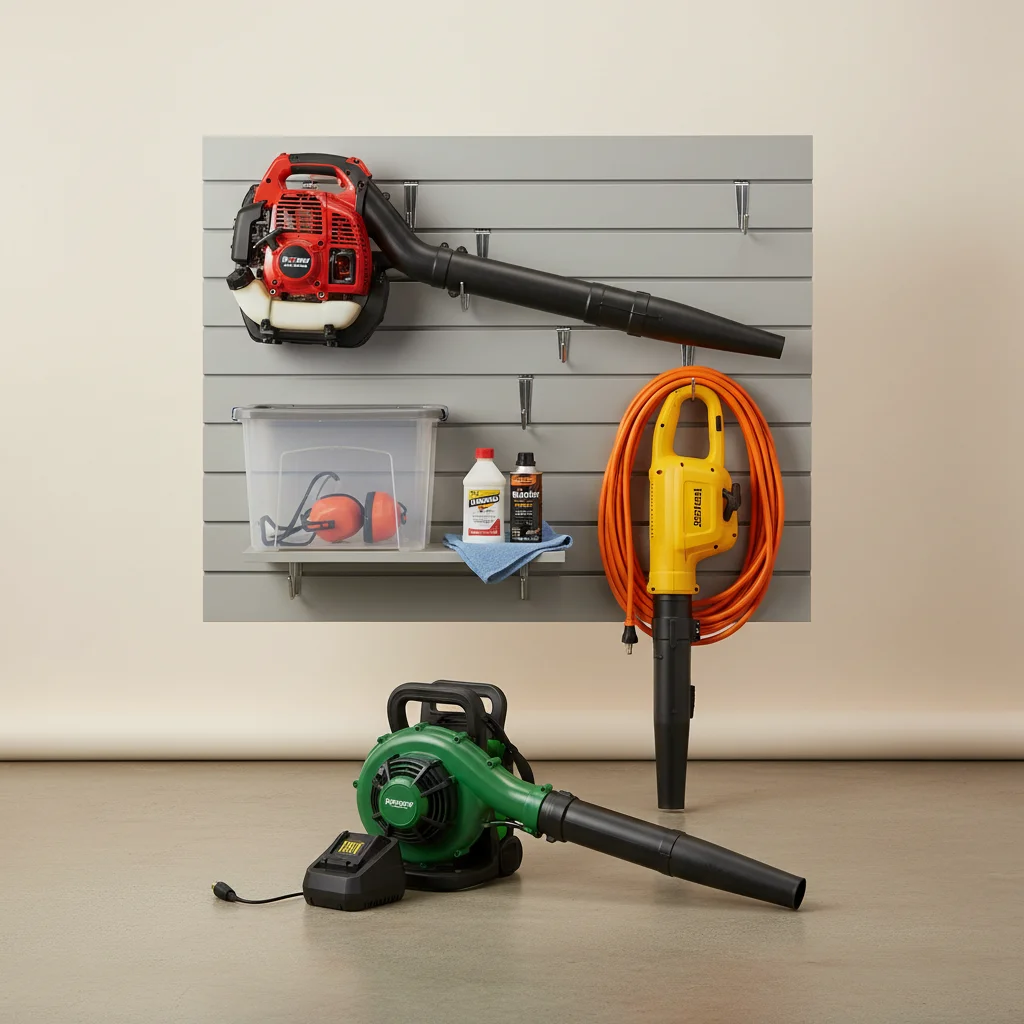
Proper leaf blower storage during the off-season is crucial for maintaining its performance and extending its lifespan. By following five essential tips, you can prevent common issues like fuel degradation, battery damage, and general wear and tear, ensuring your equipment is ready for action when the leaves start falling again.
Clean Your Leaf Blower Thoroughly Before Storage
Before putting your leaf blower away for an extended period, a thorough cleaning is paramount. Remove any debris, dirt, or grass clippings from the air intake, fan, and exhaust areas. For gas models, clean the exterior with a damp cloth and ensure no fuel or oil residue remains. Electric and battery-powered units should also be wiped down, paying close attention to vents and battery terminals. A clean machine is less likely to harbor moisture or pests that could cause damage over time.
Stabilize Fuel for Gas Leaf Blowers
For gas-powered leaf blowers, fuel stabilization is a critical step. Untreated gasoline can degrade over time, leading to carburetor clogs and starting issues. Add a high-quality fuel stabilizer to the gas tank, then run the engine for a few minutes to ensure the treated fuel circulates throughout the system. Alternatively, you can completely drain the fuel tank and carburetor if you prefer not to use a stabilizer. This prevents gumming and corrosion within the fuel system.
Remove and Store Batteries Separately
|
Our Picks for the Best Leaf Blower in 2026
As an Amazon Associate I earn from qualifying purchases.
|
||
| Num | Product | Action |
|---|---|---|
| 1 | WORX Cordless Leaf Blower, Electric Blower with Turbine Fan, Blowers for Lawn Care with 2 Speed Control, Battery & Charger Included, WG547 |

|
| 2 | WORX 12 Amp Electric Leaf Blower, Turbine Blower for Lawn Care with 600 CFM & 2 Speed Control, Corded, WG520 |
|
| 3 | Electric Leaf Blower Cordless, 21V Battery Powered Blower with 2 x 4.0Ah Battery and Charge, 715CFM &180MPH and 3 Speed Mode, Brushless Handheld Blowers for Lawn Care, Yard, Leaves, Dust, Snow |
|
| 4 | EGO POWER+ Leaf Blower, Cordless Electric 530 CFM, Battery and Charger Not Included - LB5300 |
|
| 5 | BLACK+DECKER Electric Leaf Blower, Handheld Blowers for Lawn Care, Lightweight, 180 MPH 180 CFM, 7-Amp, Corded (LB700) |
|
| 6 | 6-Speed Modes Cordless Leaf Blower 21V,200MPH High-Velocity Electric Blower,Lightweight for Dry/Wet Leaves,Lawn Debris,Garage and Driveway Cleaning,Red |
|
| 7 | MZK Cordless Leaf Blower,20V Battery Powered Electric Blower for Lawn Care, Electric Lightweight Leaf Blower for Blowing Leaves, Patio Cleaning and Dust(2 * 2Ah Battery & Charger Included),LF40D13 |
|
| 8 | DEWALT 20V MAX Blower, 100 CFM Airflow, Variable Speed Switch, Includes Trigger Lock, Bare Tool Only (DCE100B) |
|
| 9 | BLACK + DECKER Electric Leaf Blower, Hand Held Blowers for Lawn Care, Up to 450 CFM and 140 MPH Power, Axial, Lightweight, Corded (BEBL750) |
|
| 10 | 20V Handheld Electric Cordless Leaf Blower with 2.0Ah Battery & Fast Charger, Powerful up to 93 MPH, 350 CFM Stepless Speed Control, Powerful for Yard Cleaning |
|
If you own a cordless electric leaf blower, always remove the battery before storing the unit. Store lithium-ion batteries in a cool, dry place, ideally at a charge level between 40% and 60%. Storing fully charged or completely depleted batteries for long periods can reduce their overall lifespan. Keep the battery away from extreme temperatures and direct sunlight to prevent damage.
Inspect and Lubricate Moving Parts
Before storage, take a moment to inspect all moving parts of your leaf blower. Check for any loose screws, worn belts, or damaged components. Lubricate any accessible moving parts, such as the throttle cable or fan bearings, with a suitable lubricant. This helps prevent rust and ensures smooth operation when you retrieve the blower for its next use. Addressing minor issues now can prevent major repairs later.
Choose the Right Storage Location
The environment where you store your leaf blower significantly impacts its longevity. A dry, cool, and well-ventilated space is ideal. Avoid storing it in areas with extreme temperature fluctuations or high humidity, as these conditions can lead to rust, corrosion, and material degradation. Garages, sheds, or basements are generally suitable, provided they are not prone to dampness. Consider using a cover to protect the blower from dust and accidental damage.
- Ensure the storage area is dry and free from excessive humidity.
- Keep the leaf blower elevated off the ground to prevent moisture absorption.
- Store gas models away from ignition sources and in a well-ventilated space.
- Protect the unit from dust and pests with a breathable cover.
- Avoid storing batteries in extreme hot or cold conditions.
Get our weekly buyer guide
Practical specs, not advice. Unsubscribe anytime.

This is exactly what I needed! I’ve been guilty of just tossing my battery-powered unit in the shed and forgetting about it. The reminder to pay close attention to the battery itself and its terminals is super important. I want my equipment to last, and these simple steps will definitely help extend its lifespan and ensure it’s ready for action next fall.
The advice on thorough cleaning before storage is solid, and I always try to get all the debris out of the fan area. However, I’ve found that even with careful cleaning, sometimes moisture still gets trapped. I was hoping for a more specific recommendation on how to prevent rust on metal parts, especially after a really wet season. It’s a good starting point, but could use more depth on that one issue.
Great advice here! I’ve been pretty good about cleaning my electric leaf blower, especially wiping down the vents, but I never really thought about the battery terminals. That’s a small detail that could make a big difference in the long run. My only minor complaint is that I wish there was a bit more detail on specific cleaning products to use for stubborn grime.
I always just drained the fuel and hoped for the best, but the tip about using a fuel stabilizer for my gas leaf blower is a game-changer. It makes so much sense to prevent that gunk from building up. My old blower always had trouble starting after winter, and I bet this is why. Definitely doing this from now on to keep it running smoothly.