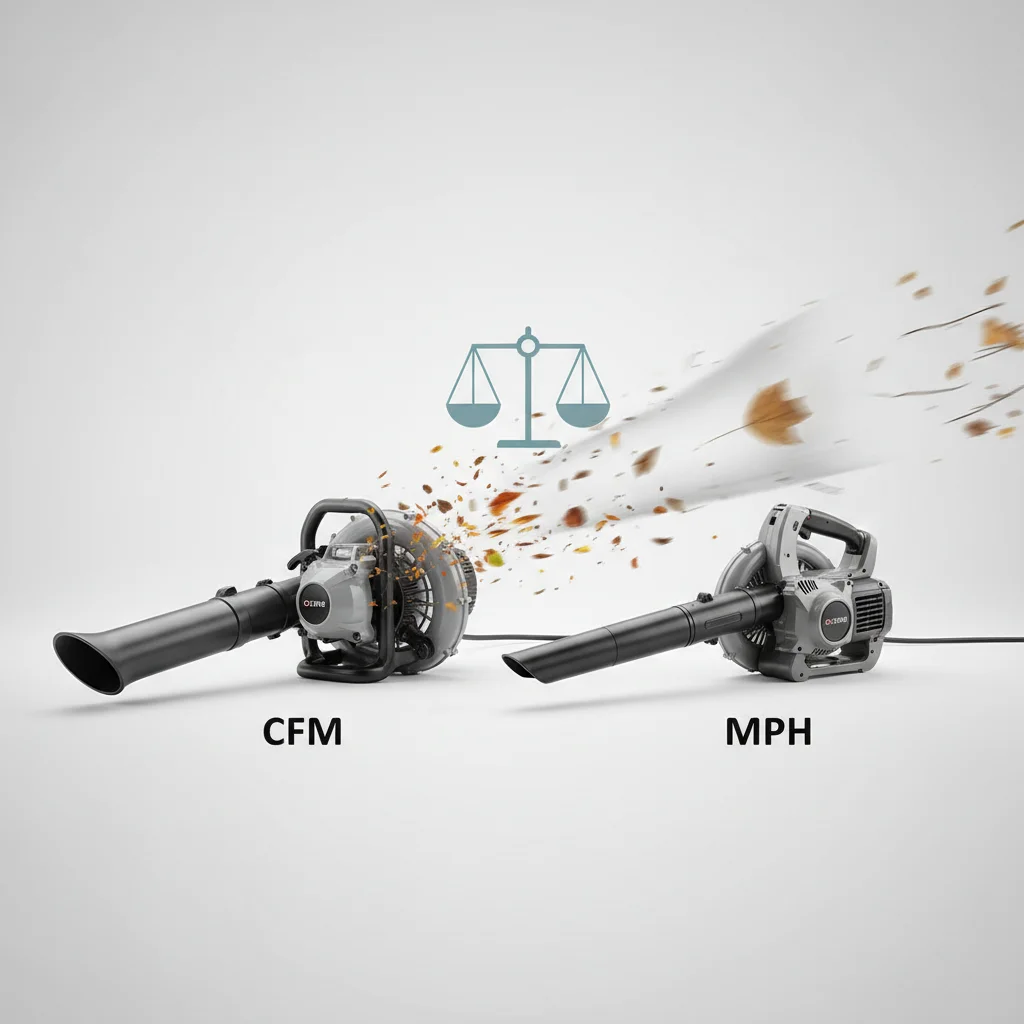
When evaluating leaf blowers, understanding the difference between CFM (Cubic Feet per Minute) and MPH (Miles Per Hour) is crucial for making an informed decision. While both metrics describe aspects of a leaf blower’s performance, CFM is generally the more important factor for overall debris clearing efficiency, especially for larger areas and heavier debris. MPH, on the other hand, indicates the speed at which air exits the nozzle and is more relevant for dislodging stubborn, stuck-on debris.
Understanding CFM: The Power of Volume
CFM measures the volume of air a leaf blower moves per minute. A higher CFM rating means the blower can move a greater quantity of leaves and debris in a single pass. This is particularly beneficial for clearing large areas like driveways, patios, and lawns quickly and efficiently. For example, a blower with 600 CFM will clear a wider path and move more material than a 300 CFM blower, even if their MPH ratings are similar. Think of CFM as the ‘muscle’ of the blower, determining how much work it can do.
Understanding MPH: The Power of Speed
MPH measures the speed of the air exiting the leaf blower’s nozzle. A higher MPH rating indicates a more concentrated and forceful stream of air. This is advantageous for dislodging wet leaves, matted debris, or small stones that are stuck to surfaces. While a high MPH can be impressive, it’s less effective on its own for moving large piles of dry leaves across a wide area. It’s the ‘precision’ aspect, useful for targeted cleaning.
The Interplay: Why Both Matter (But CFM More)
|
Our Picks for the Best Leaf Blower in 2026
As an Amazon Associate I earn from qualifying purchases.
|
||
| Num | Product | Action |
|---|---|---|
| 1 | 6-Speed Modes Cordless Leaf Blower 21V,200MPH High-Velocity Electric Blower,Lightweight for Dry/Wet Leaves,Lawn Debris,Garage and Driveway Cleaning,Red |

|
| 2 | DEWALT 20V MAX Blower, 100 CFM Airflow, Variable Speed Switch, Includes Trigger Lock, Bare Tool Only (DCE100B) |
|
| 3 | Electric Leaf Blower Cordless, 21V Battery Powered Blower with 2 x 4.0Ah Battery and Charge, 715CFM &180MPH and 3 Speed Mode, Brushless Handheld Blowers for Lawn Care, Yard, Leaves, Dust, Snow |
|
| 4 | MZK Cordless Leaf Blower,20V Battery Powered Electric Blower for Lawn Care, Electric Lightweight Leaf Blower for Blowing Leaves, Patio Cleaning and Dust(2 * 2Ah Battery & Charger Included),LF40D13 |
|
| 5 | BLACK+DECKER Electric Leaf Blower, Handheld Blowers for Lawn Care, Lightweight, 180 MPH 180 CFM, 7-Amp, Corded (LB700) |
|
| 6 | BLACK + DECKER Electric Leaf Blower, Hand Held Blowers for Lawn Care, Up to 450 CFM and 140 MPH Power, Axial, Lightweight, Corded (BEBL750) |
|
| 7 | EGO POWER+ Leaf Blower, Cordless Electric 530 CFM, Battery and Charger Not Included - LB5300 |
|
| 8 | WORX Cordless Leaf Blower, Electric Blower with Turbine Fan, Blowers for Lawn Care with 2 Speed Control, Battery & Charger Included, WG547 |
|
| 9 | 20V Handheld Electric Cordless Leaf Blower with 2.0Ah Battery & Fast Charger, Powerful up to 93 MPH, 350 CFM Stepless Speed Control, Powerful for Yard Cleaning |
|
| 10 | WORX 12 Amp Electric Leaf Blower, Turbine Blower for Lawn Care with 600 CFM & 2 Speed Control, Corded, WG520 |
|
Ideally, a good leaf blower will offer a balance of both high CFM and respectable MPH. However, if you have to prioritize, focus on CFM for general yard work. A blower with high CFM can move a large volume of air, which is the primary requirement for clearing most leaf debris. High MPH then adds the ability to tackle more challenging, stuck-on messes. For instance, a blower with 500 CFM and 150 MPH will likely outperform a blower with 300 CFM and 200 MPH for most typical yard cleaning tasks.
- High CFM: Best for moving large volumes of dry leaves, clearing wide areas, and general yard maintenance.
- High MPH: Ideal for dislodging wet, matted leaves, stubborn debris, and targeted cleaning.
- Balanced Performance: The most versatile blowers offer a strong combination of both metrics.
- Nozzle Design: Tapered nozzles often increase MPH, while wider nozzles can maximize CFM.
- Engine/Motor Power: Directly impacts the potential for both CFM and MPH output.
Choosing the Right Blower for Your Needs
Consider the typical tasks you’ll be performing. For homeowners with large yards and a lot of dry leaves, a high CFM blower (e.g., 400-600+ CFM) is usually the best choice. If you frequently deal with wet leaves, pine needles, or debris stuck in crevices, a blower with a higher MPH (e.g., 150-200+ MPH) will be beneficial. Many manufacturers now provide both specifications, allowing for a more informed comparison. Always check the product specifications carefully before purchasing.
For a comprehensive selection of high-performance leaf blowers, consider browsing options like the. These models often provide an excellent balance of both CFM and MPH, ensuring you have the power and precision for any task. Remember that the overall design and engine efficiency also play a role in how effectively these metrics translate into real-world performance.
Ultimately, while MPH provides a good indicator of air speed, CFM is the more critical metric for determining a leaf blower’s overall effectiveness in moving large quantities of debris. Prioritizing CFM will generally lead to a more satisfying and efficient cleaning experience for most users. For those seeking top-tier performance, exploring professional-grade models such as thecan offer superior power and durability.
Get our weekly buyer guide
Practical specs, not advice. Unsubscribe anytime.

I always just looked at MPH before, thinking faster was better. But after reading about CFM, it totally clicked! My old blower was decent for small stuff, but for my big yard with lots of oak leaves, I needed more volume. Just got a new one with 650 CFM and it’s a game changer for clearing the driveway and patio. Thanks for the breakdown!
I appreciate the explanation of CFM vs MPH, it’s something I’ve always wondered about. However, I still find that for those really stuck-on, matted leaves, a high MPH really makes a difference. My current blower has a good CFM, but sometimes I wish it had more nozzle speed to blast those stubborn bits off the concrete. It’s a trade-off, I guess.
This really helped me understand why my current blower struggles with wet leaves. I thought it was powerful enough, but the emphasis on CFM for heavier debris makes so much sense now. I’m definitely upgrading to something with a higher CFM rating next season. It’s good to know what to look for beyond just the speed.
Finally, someone explains this clearly! I was so confused by all the numbers on the boxes. Knowing that CFM is key for moving large quantities of leaves quickly is exactly what I needed. My lawn is pretty big, so efficiency is a must. This info made my decision to get a higher CFM model much easier.