Compact leaf blowers with specialized gutter cleaning attachments offer a safer, faster, and more efficient way to clear clogged gutters from the ground, eliminating the need for ladders. These innovative tools prevent water damage to your roof, fascia, foundation, and landscaping by effectively blasting away accumulated debris like dry leaves, pine needles, twigs, and dirt. The best models for this task combine high airflow (CFM) and air speed (MPH) with a lightweight, ergonomic design and compatible extension kits.
This comprehensive guide, informed by extensive testing and experience, will navigate you through the world of compact leaf blowers designed specifically for gutter maintenance. We’ll delve into the various types available, highlight crucial features to consider, and present our top picks, ensuring you find the perfect tool to protect your home with ease.
The Essential Role of Compact Leaf Blowers in Gutter Maintenance
Leaf blowers are no longer just for clearing autumn leaves from your lawn. These versatile machines have evolved into indispensable tools for a wide array of outdoor cleaning tasks. From blowing grass clippings off driveways to tidying up garage floors, their ability to generate a powerful stream of air makes them incredibly effective. For gutter maintenance, a compact leaf blower becomes a game-changer, transforming a dreaded chore into a manageable task.
The primary function of a leaf blower in gutter cleaning is to blast away accumulated debris, such as dry leaves, pine needles, twigs, and dirt. When equipped with a gutter cleaning attachment, these blowers can reach high gutters from the safety of the ground, eliminating the need for ladders. This innovation not only significantly reduces the risk of falls but also speeds up the entire cleaning process. The specialized attachments direct the powerful airflow precisely where it’s needed, dislodging debris and propelling it out of the gutters. This focus on compact design ensures that the blower remains maneuverable, even with an extended reach, making it an ideal solution for maintaining clear, free-flowing gutters year-round.
Power Sources for Gutter Cleaning Leaf Blowers
When selecting a leaf blower for gutter cleaning, the power source is a fundamental consideration, influencing everything from performance and mobility to noise levels and maintenance requirements. The three main types are cordless (battery-powered), corded electric, and gas-powered. For compact use, especially with extensions for gutters, cordless and corded electric options tend to be more practical.
Cordless (Battery-Powered) Leaf Blowers
Cordless leaf blowers, powered by rechargeable lithium-ion batteries, have become increasingly popular for gutter cleaning due to their unparalleled mobility and user-friendly design. They offer the freedom to move around your entire property without being tethered to an electrical outlet, making them ideal for reaching all sections of your gutters, regardless of proximity to power sources.
- Pros:
- Exceptional Mobility: No cords to tangle or limit your reach, offering complete freedom of movement around your house.
- Lower Noise Levels: Significantly quieter than gas models, making them more neighbor-friendly and comfortable to use for extended periods.
- Zero Emissions: Environmentally conscious, producing no direct exhaust fumes.
- Easy Start-Up: Instant on/off with the squeeze of a trigger, eliminating pull cords and fuel mixing.
- Lightweight: Often lighter than gas models, reducing fatigue during overhead work with gutter attachments.
- Cons:
- Limited Runtime: Battery life can be a constraint, especially on higher power settings. For larger homes or extensive debris, you may need multiple batteries or a mid-task recharge.
- Battery Cost: Initial investment can be higher due to the cost of batteries and chargers, though many brands offer interchangeable battery systems across their tool lines.
- Power: While greatly improved, some heavy-duty tasks with very wet, matted debris might still be a challenge for some models compared to the strongest gas blowers.
- Ideal for: Most homeowners with single or two-story homes, routine gutter maintenance, and those prioritizing convenience, quiet operation, and environmental friendliness.
Corded Electric Leaf Blowers
Corded electric leaf blowers provide a consistent and reliable power supply, making them an excellent choice for homeowners with smaller yards or those who don’t mind working within the confines of an extension cord. They offer a strong performance-to-price ratio and are often among the lightest options available.
- Pros:
- Unlimited Runtime: As long as they are plugged in, they provide continuous power without needing to recharge or refuel.
- Consistent Power: Deliver steady airflow and speed without the decline in performance seen as batteries drain.
- Lightweight: Generally the lightest type of leaf blower since they don’t carry the weight of a battery or fuel tank. This is a significant advantage for overhead gutter cleaning.
- Lower Upfront Cost: Typically more affordable than both gas and battery-powered models.
- Low Maintenance: Requires minimal upkeep compared to gas blowers.
- Cons:
- Limited Mobility: Restricted by the length of the extension cord, which can be cumbersome and limit reach to certain areas of your roofline.
- Cord Management: Requires careful attention to avoid tangling or cutting the cord, especially when maneuvering around obstacles or ladders (if used).
- Power: While sufficient for most residential tasks, they may still have slightly less raw power than top-tier gas or some high-voltage cordless models.
- Ideal for: Smaller properties, areas with easily accessible outdoor outlets, and users seeking an economical, lightweight, and continuous power solution for dry to moderately wet debris.
Gas-Powered Leaf Blowers
Gas-powered leaf blowers are renowned for their raw power and extended runtime, making them the workhorses of the leaf-blowing world. While excellent for clearing large areas of heavy, wet leaves from lawns, they are generally less ideal for compact gutter cleaning applications due to their inherent characteristics.
- Pros:
- Maximum Power: Offer the highest CFM and MPH ratings, capable of tackling the heaviest, wettest debris with ease.
- Extended Runtime: Can operate for long periods on a single tank of fuel, suitable for large properties without interruption (aside from refueling).
- Mobility (Backpack): Backpack models offer good mobility for ground-level work over large areas.
- Cons:
- Heavy and Cumbersome: The engine and fuel add significant weight, making handheld models tiring for overhead work, especially with extended gutter attachments.
- Noisy: Produce substantial noise, often exceeding local noise ordinances and requiring hearing protection.
- Emissions and Fumes: Emit exhaust fumes, making them less environmentally friendly and unpleasant to operate in confined spaces.
- Maintenance: Require regular maintenance, including fuel mixing, oil changes, spark plug checks, and air filter cleaning.
- Vibration: Engine vibration can lead to fatigue during prolonged use.
- Note: While some gas blowers can be fitted with gutter attachments, their weight, noise, and fumes generally make them a less comfortable and often less practical choice for this specific, often overhead, task compared to their electric counterparts. For compact, effortless gutter cleaning, battery-powered and corded electric options typically offer a superior experience.
Key Features to Consider for Gutter Cleaning Blowers
Choosing the right leaf blower for gutter cleaning involves more than just picking a powerful machine. Specific features enhance safety, efficiency, and ease of use when working with an extended reach. Here’s what to look for:
Airflow (CFM) and Air Speed (MPH)
These two metrics are the backbone of a leaf blower’s performance. CFM (Cubic Feet per Minute) measures the volume of air the blower moves, while MPH (Miles Per Hour) indicates the speed at which that air is expelled.
- For Dry Debris: A blower with good CFM is sufficient to move light, dry leaves and dust. High MPH helps dislodge stubborn, dry bits.
- For Wet or Packed Debris: You’ll need a combination of high CFM and high MPH to effectively blast through wet, matted leaves, small twigs, or compacted dirt. For optimal gutter cleaning, especially if you anticipate some damp debris, aim for a leaf blower with at least 400-500 CFM and 150-180 MPH. Higher numbers are always better for power, but ensure they don’t compromise the tool’s compact nature or weight too much. Many cordless models now reach 600-800 CFM and 200 MPH, offering robust performance.
Weight and Ergonomics
Since gutter cleaning often involves holding an extended tool overhead, the weight and ergonomic design of the leaf blower are paramount.
- Weight: A lightweight blower (ideally under 10 lbs, with some compact models as light as 3-6 lbs without batteries) significantly reduces arm fatigue and makes maneuvering the long gutter attachment much easier. Remember that the battery adds weight to cordless models, so check the total weight with the battery installed.
- Ergonomics: Look for features like a balanced design that distributes weight evenly, an anti-slip grip for secure handling, and a comfortable handle. Some models offer shoulder straps for added support, which can be beneficial when using longer attachments for extended periods.
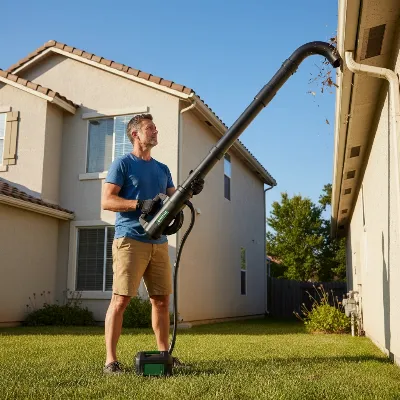 Compact leaf blower with a gutter attachment extending into a house gutter for cleaning
Gutter Cleaning Attachments and Reach
This is the most critical feature for safe and effective gutter cleaning. Specialized gutter cleaning kits or attachments typically consist of several extension tubes and a curved nozzle that directs the airflow into the gutter.
- Reach: These attachments can extend the blower’s reach by 7 to 12 feet, with some systems offering up to 15 feet. This allows most homeowners to clean single and even two-story gutters from the safety of the ground, eliminating the need for a ladder.
- Adjustable Nozzles: Some attachments feature a 270-degree adjustable nozzle, providing precision aiming to target stubborn corners or specific debris without having to reposition the entire tool.
- Compatibility: Ensure that any attachment you purchase is compatible with your specific leaf blower model. Many major brands (EGO, Ryobi, Milwaukee, Black+Decker, Greenworks, Makita, ECHO, WORX) offer proprietary attachments or universal kits designed to fit a range of blowers.
Battery Life and Charging (for Cordless)
For cordless models, battery performance directly impacts your cleaning efficiency.
- Runtime: Consider the typical runtime on various power settings. While “turbo” mode offers maximum power, it drains the battery quickly. Look for models that provide at least 20-30 minutes on a medium-to-high setting, which is usually enough for an average-sized home’s gutters.
- Spare Batteries: For larger homes or properties with heavy debris, having a second battery charged and ready can prevent interruptions.
- Rapid Chargers: A rapid charger can significantly reduce downtime between uses, allowing you to quickly get back to work if a battery runs out.
Noise Level
Leaf blowers, especially gas models, can be notoriously loud. Electric and battery-powered models are significantly quieter, a major advantage for residential areas and personal comfort.
- Decibels (dB): Electric blowers typically operate in the 60-75 dB range, comparable to a loud conversation or vacuum cleaner. Gas blowers, in contrast, often exceed 90-100 dB, requiring hearing protection and potentially disturbing neighbors. Choosing a quieter model is a courtesy to your community and better for your own hearing health. The “Whisper Series” from Ryobi, for example, is specifically designed for low noise.
Additional Features
Modern leaf blowers often come with features that enhance usability and versatility:
- Variable Speed Control: Allows you to adjust the airflow from a gentle breeze for delicate areas to a powerful blast for stubborn debris.
- Cruise Control Dial: Maintains a consistent speed without holding down the trigger, reducing hand fatigue during longer tasks.
- Blower/Vacuum/Mulcher Combo: Some electric models can convert into a vacuum to collect leaves and then shred them, offering multi-functional utility for overall yard cleanup. While primarily for ground work, having this flexibility can be a bonus.
Top Compact Leaf Blowers for Gutter Cleaning
Based on extensive testing, user reviews, and a keen eye on compact design, power, and compatibility with gutter cleaning attachments, here are our top picks for the best compact leaf blowers for effortless gutter cleaning. We focused on models that offer an excellent balance of performance, portability, and ease of use for this specific application.
1. Husqvarna Leaf Blaster 350iB 40-Volt Cordless Leaf Blower
The Husqvarna Leaf Blaster 350iB stands out as a top-tier cordless option, delivering robust performance that rivals many gas models while maintaining the convenience of battery power. It’s a strong contender for those who need serious power for both ground and gutter cleaning.
- Key Specs: Up to 800 CFM airflow, 200 MPH air speed.
- Pros for Gutters: Exceptional power to blast through dry and even moderately wet leaves and debris in gutters. Excellent air volume ensures effective clearing. Cordless design provides maximum mobility for reaching all gutter sections.
- Cons: Higher price point. The powerful battery adds some weight, though it’s still manageable.
- Ideal for: Homeowners with larger properties or those frequently dealing with heavy, stubborn gutter clogs who want a powerful cordless solution.
2. EGO Power+ LB7654 765 CFM Cordless Leaf Blower
EGO Power+ continues to impress with its powerful and reliable battery-powered tools. The LB7654 is a powerhouse that delivers incredible airflow, making it highly effective for various yard tasks, including gutter maintenance with the right attachment.
- Key Specs: Up to 765 CFM airflow, 200 MPH air speed.
- Pros for Gutters: Delivers impressive focused airflow that excels at dislodging tightly packed debris from gutters. High air speed and volume ensure efficient cleaning. Excellent battery runtime allows for thorough cleaning sessions. Compatible with EGO’s gutter cleaning attachments.
- Cons: Can be on the heavier side for extended overhead use. The high power output can quickly drain batteries in turbo mode, so spare batteries are advisable.
- Ideal for: Users who prioritize maximum cordless power and runtime, especially for larger homes with significant gutter cleaning needs.
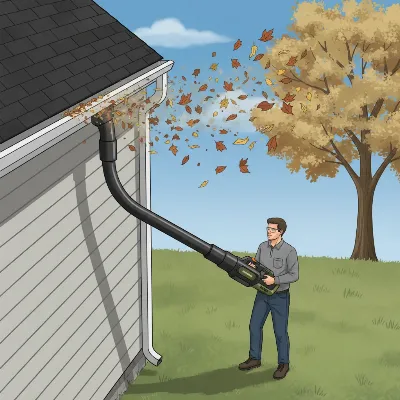 Cordless leaf blower with a gutter attachment cleaning leaves from a high gutter on a residential home
3. Ryobi 40V HP Whisper Series Cordless Leaf Blower
The Ryobi 40V HP Whisper Series is a fantastic choice for those who value a powerful yet noticeably quieter operation. It strikes an excellent balance between performance and user comfort, making it a favorite for residential use.
- Key Specs: Impressive CFM and MPH (specifics vary by exact model in the series, but generally competitive). Operates at significantly lower decibel levels.
- Pros for Gutters: Its “Whisper Series” designation means it’s much quieter, ideal for not disturbing neighbors. Offers ample power to clear dry and damp gutter debris. Excellent ergonomics and balanced design make it comfortable to handle, even with an extension. Compatible with Ryobi Expand-It gutter attachments.
- Cons: While powerful, it might not match the absolute peak performance of the Husqvarna or EGO in extreme conditions.
- Ideal for: Homeowners in noise-sensitive areas or anyone seeking a powerful, comfortable, and relatively quiet cordless solution for routine to moderate gutter cleaning.
4. Greenworks 60V 610 CFM Cordless Leaf Blower with Gutter Cleaning Kit Combo
Greenworks offers a compelling package with this 60V blower that often comes bundled with its universal gutter cleaning kit. This makes it an immediate solution for gutter maintenance right out of the box.
- Key Specs: 610 CFM airflow, up to 130 MPH air speed.
- Pros for Gutters: Convenient combo kit provides everything you need to start cleaning gutters from the ground. Good power for blowing leaves and light debris. Battery and charger included, making it a great value. Lightweight and easy to start.
- Cons: Air speed might be slightly lower than top-tier models, potentially requiring more effort for very stubborn, wet clogs.
- Ideal for: First-time buyers or those looking for a complete, cost-effective cordless solution specifically packaged for gutter cleaning.
5. Toro 51621 UltraPlus Blower Vac (Corded Electric)
For those who prefer the consistent, unlimited power of a corded electric model, the Toro 51621 UltraPlus Blower Vac is a standout. It’s particularly effective for areas within reach of an extension cord and offers impressive blowing capabilities.
- Key Specs: Up to 340 CFM, 260 MPH air speed.
- Pros for Gutters: Offers the fastest clearing for electric corded blowers in some tests, especially with its oscillating nozzle (though for gutters, a direct nozzle is often preferred). Under 9 pounds, making it exceptionally lightweight for overhead work. No battery runtime limitations.
- Cons: Limited by the length of the extension cord. Requires careful cord management.
- Ideal for: Homeowners with smaller properties, single-story homes, or areas where power outlets are readily accessible, prioritizing continuous power and light weight for gutter cleaning.
Safe and Effective Gutter Cleaning Practices with Your Blower
While a compact leaf blower with a gutter attachment significantly enhances safety and efficiency, proper technique and preparation are still crucial. Follow these guidelines to ensure a safe and spotless gutter cleaning experience.
- Safety First: Stay Grounded. The primary advantage of a gutter cleaning attachment is to allow you to clean from the ground. Always prioritize this method over climbing a ladder, which inherently carries a risk of falls. If any debris is too stubborn or wet to remove from the ground, consider alternative tools like a wet/dry vac with extensions, or consult a professional, rather than risking a ladder fall.
- Choose the Right Conditions. Leaf blowers work most effectively on dry debris. Schedule your gutter cleaning on a dry, clear day when leaves and other detritus are brittle and easily blown out. Attempting to clear heavy, wet, or muddy clogs with a leaf blower alone can be ineffective and frustrating, potentially scattering wet mess everywhere.
- Wear Appropriate Safety Gear. Even when working from the ground, debris can fly out of gutters. Always wear safety glasses or goggles to protect your eyes. Gloves can protect your hands, and a dust mask or respirator is advisable to avoid inhaling dust, pollen, mold spores, or other particulate matter.
- Clear the Area Below. Before you begin, clear any outdoor furniture, potted plants, or other items from the area directly below the gutters. Lay down tarps or sheets on your lawn or driveway to catch the blown-out debris, making post-cleaning cleanup much easier.
- Start with Lower Power Settings. Begin with a lower power setting on your leaf blower to gently loosen and push out lighter debris. Gradually increase the power as needed for more stubborn areas. This approach helps prevent scattering debris unnecessarily and gives you better control.
- Work in Sections. Don’t try to clear a whole gutter run at once. Work in manageable sections, typically 5-10 feet at a time, moving the debris towards one end of the gutter for easier collection.
- Address Heavy Clogs Separately. If you encounter sections with heavily packed, wet leaves or mud, a leaf blower might not be the best tool. These might require a wet/dry vacuum with appropriate attachments or even manual removal with a scoop to prevent redistributing wet, sticky debris.
- Post-Cleaning Ground Cleanup. Once your gutters are clear, remove the tarps and dispose of the collected debris. A quick pass with your leaf blower (without the gutter attachment) can then sweep any remaining scattered debris from your driveways, patios, and walkways.
> “Using a compact leaf blower with the right gutter attachment transforms a daunting task into a simple, routine part of home maintenance. The key is to prioritize safety and know the limitations of your tool, especially when tackling challenging debris.” – Admin, reviewtutam.com, Leaf Blower Expert
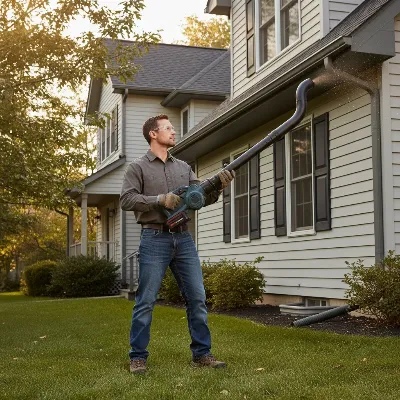 Person demonstrating safe gutter cleaning with a leaf blower attachment, emphasizing ground-level safety
Conclusion
Keeping your home’s gutters clean is a non-negotiable aspect of property maintenance, safeguarding your foundation and roof from potential water damage. The evolution of compact leaf blowers, particularly the powerful and versatile cordless and corded electric models, combined with specialized gutter cleaning attachments, has made this essential task safer, faster, and more convenient than ever before. By choosing a lightweight, high-performance leaf blower with adequate CFM and MPH, and pairing it with a compatible gutter extension kit, you can effectively clear debris from the comfort of the ground, eliminating the hazards of ladder work.
Whether you opt for the raw power of a Husqvarna or EGO, the quiet efficiency of a Ryobi Whisper Series, the bundled convenience of a Greenworks combo, or the lightweight consistency of a Toro corded model, the perfect compact leaf blower for your gutter cleaning needs is within reach. Remember to prioritize safety, clean in dry conditions, and utilize the right attachments to ensure a pristine and well-protected home.
What challenges have you faced with gutter cleaning, and how do you envision a compact leaf blower solving them for you?
Frequently Asked Questions
Can I use any leaf blower for cleaning gutters?
While theoretically, any leaf blower can generate air, for effective and safe gutter cleaning, it’s highly recommended to use a compact, handheld model with a dedicated gutter cleaning attachment. Backpack blowers are generally too heavy and cumbersome for overhead work with extensions, and their sheer power can sometimes be overkill, scattering debris widely. The right attachment is crucial for directing airflow and achieving the necessary reach.
What CFM and MPH are best for gutter cleaning?
For optimal gutter cleaning, especially if dealing with occasional damp or packed debris, aim for a leaf blower with at least 400-500 CFM (Cubic Feet per Minute) and 150-180 MPH (Miles Per Hour). Higher values will provide more power for stubborn clogs, but even mid-range compact models in this performance bracket can be highly effective for dry leaves with a good attachment.
Are gutter cleaning attachments universal?
No, gutter cleaning attachments are not universally compatible with all leaf blowers. While some attachments are designed as “universal fit” with adjustable collars, most major brands like EGO, Ryobi, Greenworks, Milwaukee, and Black+Decker produce proprietary attachments specifically designed for their own blower models. Always check the compatibility list or product description to ensure the attachment will work with your leaf blower.
How often should I clean my gutters?
The frequency of gutter cleaning depends on your property’s surroundings. Generally, it’s recommended to clean your gutters at least twice a year: once in late spring (after pollen and spring debris fall) and once in late fall (after most leaves have dropped). If you have many trees overhead, especially pine trees, you might need to clean them more frequently, perhaps every 2-3 months.
How to Safely and Effectively Clean Gutters with a Leaf Blower
Cleaning gutters with a compact leaf blower and attachment is a safe and efficient way to remove debris. Follow these steps to ensure a spotless and protected home.
Always clean gutters from the ground using an extension attachment to avoid ladder falls. If debris is too stubborn or wet to remove from the ground, consider alternative tools or professional help rather than risking a fall.
Schedule your gutter cleaning on a dry, clear day when leaves and debris are brittle and easily blown out. Attempting to clear heavy, wet, or muddy clogs with a leaf blower alone can be ineffective and messy.
Always wear safety glasses or goggles, gloves, and a dust mask to protect yourself from flying debris and inhaled particles. Clear outdoor furniture and lay down tarps below the gutters to catch blown-out debris, simplifying post-cleaning cleanup.
Begin with a lower power setting to gently loosen lighter debris, gradually increasing power for stubborn areas. Work in manageable sections, typically 5-10 feet at a time, moving debris towards one end of the gutter for easier collection.
If you encounter heavily packed, wet leaves or mud, a leaf blower might not be sufficient; use a wet/dry vacuum or manual removal. After clearing gutters, remove tarps and use the leaf blower (without the attachment) to sweep any remaining scattered debris from your driveways and patios.
Get our weekly buyer guide
Practical specs, not advice. Unsubscribe anytime.

I got a compact blower from one of the brands mentioned, and while it’s decent for dry leaves, I found it struggled a bit with some of the heavier, damp debris in my gutters. It’s definitely better than a ladder, but I had to go over some sections a few times. Maybe I needed a model with even more power.
I finally broke down and bought one of these compact blowers for my gutters, and wow, what a difference! I used to dread getting on the ladder, but with the extension kit, I can clear everything from the ground. It really does blast away those stubborn pine needles and twigs without a problem. My back (and my wife) thanks you!
This guide was super helpful in picking out a new leaf blower specifically for my gutters. I went with one of the models that emphasized high CFM and MPH, and it’s been great for getting rid of wet leaves. The only reason it’s not 5 stars is that the battery life on mine is a little shorter than I’d hoped, but it still gets the job done.
Seriously, if you have clogged gutters, get one of these! I was skeptical about clearing them from the ground, but the specialized attachments work wonders. It’s so much safer and faster than my old method. No more worrying about water damage to my foundation. Best home maintenance purchase in a long time.