For seniors, the best lightweight leaf blowers typically weigh between 4 to 8 pounds and are either corded electric or battery-powered, offering an optimal blend of performance and comfort for yard work. These models transform the demanding task of clearing leaves and debris into an effortless activity, minimizing physical strain and maximizing enjoyment. Key considerations include weight, ergonomic design, CFM/MPH ratings, and noise levels to ensure a comfortable and efficient experience.
An Overview of Leaf Blowers
A leaf blower is a versatile garden tool designed to push air out of a nozzle to move loose debris like leaves, grass clippings, and light litter. These devices have evolved significantly, becoming indispensable for homeowners and professional landscapers alike. Their primary utility lies in efficiently clearing large areas that would otherwise require hours of strenuous raking.
Today’s market offers a range of leaf blowers, primarily categorized by their power source and form factor. Handheld models are the most common for residential use, prized for their portability and ease of maneuvering. Backpack blowers, while generally more powerful and often heavier, distribute weight across the user’s back, which can reduce arm fatigue for extended tasks, though their overall bulk might be less appealing for many seniors. Walk-behind blowers are robust machines for vast properties, typically beyond the scope of a senior’s typical needs for a lightweight solution. For seniors, the emphasis is overwhelmingly on handheld, lightweight options that prioritize comfort and simplicity.
Leaf Blower Types by Power Source
The power source dictates much about a leaf blower’s performance, weight, and suitability for different users and tasks. Understanding the distinctions between electric, gas, and battery-powered models is crucial when selecting the ideal lightweight option.
Electric Leaf Blowers (Corded)
Corded electric leaf blowers are an excellent choice for seniors who value lightweight design, quiet operation, and environmental friendliness. These models are typically the lightest available, as they don’t carry a battery or fuel tank. They are also significantly quieter than their gas-powered counterparts and produce zero emissions during operation.
The primary advantages include consistent power output as long as they are plugged into an outlet, minimal maintenance requirements, and an often lower purchase price. However, their main drawback is the need for an extension cord, which limits mobility and can be a tripping hazard. Corded models are best suited for smaller yards, patios, driveways, or areas where an electrical outlet is readily accessible.
Gas-Powered Leaf Blowers
Gas leaf blowers are renowned for their raw power and complete mobility, making them suitable for clearing large areas with heavy or wet debris. They are typically available in handheld or backpack configurations. While they offer superior force and unlimited runtime (as long as fuel is available), they come with significant downsides, especially for seniors seeking lightweight and easy-to-use options.
These blowers are generally much heavier, noisier, and produce exhaust fumes, requiring more maintenance like fuel mixing, spark plug checks, and filter cleaning. Their weight and the vibrations they generate can be taxing, and the noise levels often necessitate hearing protection. For these reasons, gas-powered leaf blowers are rarely the top recommendation for seniors prioritizing lightweight and comfortable use.
Battery-Powered Leaf Blowers
Battery-powered leaf blowers strike an impressive balance, combining the mobility of gas models with the quiet operation and environmental benefits of electric ones. They are increasingly popular, offering cordless freedom without the noise and fumes. Modern battery technology has advanced significantly, providing ample power for most residential tasks.
Their advantages include being lighter than gas models, relatively quiet, and maintenance-free beyond battery charging. The absence of a cord eliminates tripping hazards and allows for unrestricted movement around the yard. The main considerations are battery runtime, which can vary depending on power settings and battery capacity, and the initial cost, which tends to be higher than corded electric models due to the battery and charger. Battery-powered blowers are ideal for small to medium-sized yards, offering the perfect blend of power, portability, and convenience for many seniors.
Detailed Comparison of Leaf Blower Types
To aid in your decision, here’s a comparison table highlighting the key differences between the main types of leaf blowers, with a focus on factors relevant to seniors.
| Feature | Corded Electric Leaf Blower | Gas-Powered Leaf Blower | Battery-Powered Leaf Blower |
|---|---|---|---|
| Power Source | Electricity (wall outlet) | Gasoline/Oil Mix | Rechargeable Lithium-ion Battery |
| Weight | Lightest (3-8 lbs) | Heaviest (8-25 lbs handheld, 15-30 lbs backpack) | Moderate (5-12 lbs, including battery) |
| Noise Level | Quietest (60-70 dB) | Loudest (90-105 dB) | Quieter (70-80 dB) |
| Portability | Limited by cord length | Highly mobile | Highly mobile, cordless freedom |
| Runtime | Unlimited (continuous power) | Unlimited (as long as fuel is available) | Limited by battery charge (15-60+ mins) |
| Maintenance | Very low (cleaning, cord checks) | High (fuel mixing, spark plugs, filters, engine upkeep) | Low (battery charging, cleaning) |
| Emissions | Zero | High | Zero |
| Ideal Use | Small yards, patios, driveways with easy outlet access | Large properties, heavy/wet debris (less ideal for seniors) | Small to medium yards, quick cleanups, convenience |
| Pros for Seniors | Extremely lightweight, easy to start, quiet, eco-friendly, affordable | High power (but often too heavy and loud) | Cordless freedom, relatively quiet, eco-friendly, decent power |
| Cons for Seniors | Cord limits range, potential tripping hazard | Heavy, loud, high maintenance, fumes, vibrations, harder to start | Limited runtime per charge, higher initial cost, battery weight |
 A senior woman effortlessly using a lightweight, battery-powered leaf blower to clear dry leaves from her small garden path. The scene is bright and calm, emphasizing ease of use and safety for older adults, with warm, natural lighting and a realistic style.
Key Factors When Choosing a Leaf Blower for Seniors
Selecting the perfect lightweight leaf blower involves more than just picking the lightest model. Several crucial factors must align with the user’s physical capabilities and specific yard care needs.
Assessing Your Needs
Before even looking at models, consider your individual circumstances.
- Area Size: For a small patio or driveway, a basic corded or compact battery blower will suffice. Medium-sized yards benefit from more powerful cordless options. Large properties might typically require more robust tools, but for seniors, a lighter, less powerful option for essential tasks is often preferred over struggling with a heavy-duty model.
- Debris Type: Dry, light leaves are easily moved by most lightweight blowers. Wet leaves or small twigs require higher CFM and MPH, meaning you might need to balance weight with a bit more power.
- Frequency of Use: If you’re using it weekly, durability and consistent comfort are paramount. For occasional cleanups, a simpler model may be fine.
Power Output: CFM and MPH
Understanding CFM (Cubic Feet per Minute) and MPH (Miles per Hour) is vital.
- CFM indicates the volume of air the blower moves. Higher CFM means you can clear more leaves in one pass, ideal for larger areas.
- MPH indicates the speed of the air. Higher MPH is effective for dislodging stubborn, wet leaves or debris stuck to surfaces.
For seniors, the goal is often to find a balance. You don’t necessarily need the highest power, which usually comes with increased weight. A blower with around 300-400 CFM and 100-150 MPH is often sufficient for light to medium tasks in residential settings, providing effective clearing without being overly burdensome.
Weight and Ergonomics
This is perhaps the most critical factor for seniors. A truly lightweight leaf blower will typically weigh between 5 and 10 pounds (including the battery for cordless models).
- Handheld vs. Backpack: For most seniors, handheld models are preferred due to their immediate lightness and maneuverability. While backpack blowers distribute weight, their initial lifting and strapping on can be challenging, and the overall unit is heavier.
- Balanced Design: A well-balanced blower feels lighter than its actual weight. Look for models where the weight is evenly distributed or centered, preventing arm and wrist strain.
- Comfortable Handles: Padded, anti-vibration, or ergonomically shaped handles are crucial for grip comfort and reducing hand fatigue.
- Easy Controls: Simple, intuitive controls that are easy to reach and operate, sometimes with variable speed triggers or cruise control, enhance the user experience.
Noise Level
Excessive noise is not only a nuisance to neighbors but can also be detrimental to the user’s hearing. Electric and battery-powered blowers are considerably quieter than gas models. Look for models with decibel ratings in the 60-70 dB range for optimal comfort, though some powerful battery models might reach into the low 80s. Always consider wearing hearing protection, especially for extended use.
Additional Features
While simplicity is often key, some features can add convenience without significantly increasing weight or complexity.
- Variable Speed Settings: Allows you to adjust power for different tasks, from gentle clearing of flowerbeds to moving larger piles of leaves.
- Cruise Control: Maintains a set speed without constant pressure on the trigger, reducing hand fatigue.
- Vacuum/Mulcher Function: Some blowers double as vacuums and mulchers, sucking up leaves and shredding them for compost. While useful, these features typically add weight and complexity, so assess if the added functionality outweighs the increased bulk.
- Battery Compatibility: If you already own other cordless tools from a particular brand, choosing a leaf blower that uses the same battery system can save money and simplify charging.
Brand Reputation and Price
Investing in a reputable brand often means better build quality, reliable performance, and access to customer support and warranties. While budget-friendly options exist, prioritize models known for their durability and positive user reviews. Compare prices across various retailers and consider the long-term value, including battery replacement costs for cordless models.
Top Lightweight Leaf Blowers for Seniors
Based on the criteria of weight, ease of use, power, and ergonomic design, here are some of the best lightweight leaf blowers well-suited for seniors. These models generally fall into the battery-powered or corded electric categories, providing an optimal blend of performance and comfort.
1. Worx WG520 Turbine 600 Electric Leaf Blower (Corded)
Key Specs: Up to 600 CFM, 110 MPH, typically around 6.4 lbs.
- Pros: Exceptionally lightweight and powerful for a corded model, turbine technology provides high-volume airflow, simple operation, continuous power, very affordable. It excels at clearing wet and matted leaves from various surfaces.
- Cons: Limited by cord, requires an extension cord.
- Why it’s good for seniors: Its very light weight makes it easy to carry and maneuver without fatigue. The high CFM means less effort to move piles of leaves, and the corded design ensures consistent power without worrying about battery life.
2. Sun Joe SBJ597E Electric Leaf Blower (Corded)
Key Specs: Up to 155 MPH, 250 CFM, around 4.4 lbs.
- Pros: One of the lightest and most compact models available, very inexpensive, ideal for small cleanups, easy to store.
- Cons: Lower power output compared to others, only one air speed setting, still cord-limited.
- Why it’s good for seniors: Its ultra-lightweight design is perfect for those who need minimal physical strain. It’s excellent for quickly clearing dry leaves, dust, and debris from patios, walkways, and small yards.
3. SKIL PWR Core 40 530 CFM Kit (Battery-Powered)
Key Specs: 530 CFM, 120 MPH, around 6.6 lbs (with 2.5Ah battery).
- Pros: Cordless freedom, lightweight for a battery model, excellent ergonomics, balanced design, good power for small to medium yards, detachable tube for compact storage.
- Cons: Battery runtime can be limited on higher settings, initial cost includes battery and charger.
- Why it’s good for seniors: This blower offers a fantastic blend of power and portability. The balanced design and lightweight nature reduce strain, making it comfortable for extended use. The quick-detach tube also simplifies storage.
4. Ryobi 40V HP Whisper Series Leaf Blower (Battery-Powered)
Key Specs: Up to 730 CFM, 190 MPH, around 6.4 lbs (dry weight). ANSI noise rating: 57 decibels.
- Pros: Impressively quiet operation, excellent balance of power and low noise, strong performance for a cordless unit, ergonomic design, compatible with Ryobi 40V battery system.
- Cons: Can be more expensive, heavier battery might make it less “lightweight” for some, but balance helps.
- Why it’s good for seniors: The “Whisper Series” designation means it’s one of the quietest powerful blowers available, a huge benefit for user comfort and neighborhood peace. Its balanced design makes its slightly higher power and battery weight manageable, offering strong performance without undue strain.
5. Toro 60V Max 157 MPH Brushless Leaf Blower (Battery-Powered)
Key Specs: Up to 605 CFM, 157 MPH, lightweight ergonomic design.
- Pros: Strong sweeping power, durable brushless motor for extended lifespan, variable speed trigger with cruise control, good runtime on a single charge.
- Cons: Can be noisier than some other battery-powered options.
- Why it’s good for seniors: This model delivers a significant punch of power in a manageable, ergonomic package. The variable speed and cruise control features are excellent for reducing hand fatigue, allowing for comfortable clearing of various debris types.
> “Choosing the right leaf blower means finding a tool that works with you, not against you. For seniors, that translates to models prioritizing genuine lightness, intuitive controls, and designs that minimize physical strain. Don’t compromise comfort for excessive power you may not need.” – Admin, reviewtutam.com
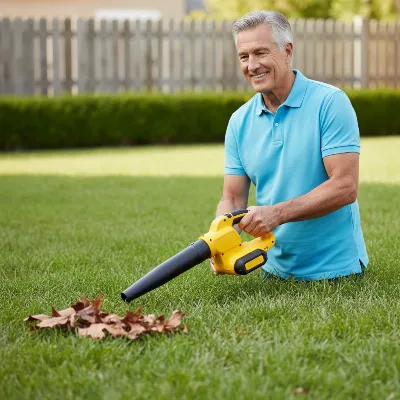 An elderly man easily holding a compact, bright yellow cordless leaf blower, clearing a small pile of dry leaves on his lawn. The image focuses on the ergonomic grip and the gentle yet effective airflow, set in a pleasant suburban backyard with soft daylight.
Using and Maintaining Your Leaf Blower Safely
Even with a lightweight leaf blower, safety and proper maintenance are key to a long and trouble-free experience.
Safe Usage Guidelines
- Eye and Hearing Protection: Always wear safety glasses or goggles to protect against flying debris. For models with higher noise levels, comfortable ear protection is highly recommended to prevent hearing damage.
- Sturdy Footing: Ensure you have stable footing, especially on uneven terrain or slippery surfaces.
- Clear the Area: Before starting, remove any large objects that could be propelled by the air stream or entangled in the blower.
- Proper Posture: Hold the blower comfortably, keeping your back straight and using your core muscles, rather than just your arms, to sweep the leaves. Avoid overreaching.
- Watch the Cord (for electric models): Be mindful of the extension cord’s location to prevent tripping or accidentally cutting it.
- Read the Manual: Familiarize yourself with your specific model’s instructions for safe operation and any unique features.
Essential Maintenance Tips
- Battery Care (for cordless models): Keep batteries charged, but avoid overcharging. Store batteries in a cool, dry place. Replace batteries when their performance significantly degrades.
- Cleaning: Regularly clear debris from the air intake vents to prevent overheating. Wipe down the exterior of the blower after each use.
- Cord Inspection (for corded models): Periodically check the power cord for any cuts, fraying, or damage. Replace if necessary.
- Nozzle Checks: Ensure the nozzle is free of obstructions and securely attached.
- Storage: Store your leaf blower in a dry, protected area, away from extreme temperatures. Many lightweight models are compact enough for easy shed or garage storage.
Environmentally Conscious Leaf Blowing
Being a responsible homeowner extends to how we manage yard waste and the tools we use. Embracing environmentally conscious practices when using a leaf blower benefits both your property and the wider community.
- Reduce Noise and Emissions: Choosing electric or battery-powered leaf blowers significantly reduces noise pollution and eliminates harmful exhaust emissions, making your yard work more pleasant for you and your neighbors.
- Mindful Operation: Avoid using your leaf blower during early mornings or late evenings when noise can be most disruptive. Utilize lower speed settings when possible, as they are quieter and often sufficient for light debris.
- Proper Leaf Disposal: Instead of bagging all leaves, consider mulching them into your lawn with a mower or a blower with a mulching feature. This returns valuable nutrients to the soil. If collecting, compost them or ensure they are disposed of according to local waste management guidelines.
- Conserve Energy: Fully charge batteries before use to maximize efficiency, and unplug corded models when not in use.
Conclusion
Finding the best lightweight leaf blower for seniors is about empowering you to enjoy your outdoor space without physical strain. The market is rich with excellent options that balance power with comfort, primarily in the battery-powered and corded electric categories. Key considerations such as weight, ergonomic design, CFM/MPH ratings, and noise levels will guide you to a choice that perfectly fits your needs.
By selecting a model that prioritizes lightness and ease of use, you can confidently maintain a tidy yard, clear pathways, and keep your property looking its best, all while minimizing effort and maximizing enjoyment. Why let heavy equipment keep you from the simple pleasure of a pristine garden when there are so many excellent lightweight leaf blowers designed with your comfort in mind?
Frequently Asked Questions
What is the ideal weight for a leaf blower for seniors?
The ideal weight for a leaf blower for seniors is generally between 4 to 8 pounds. This range ensures the blower is light enough to operate comfortably for extended periods without causing arm or back strain, making yard work more accessible and enjoyable.
Are battery-powered leaf blowers powerful enough for seniors?
Yes, modern battery-powered leaf blowers are often powerful enough for most residential tasks seniors undertake, such as clearing dry leaves, grass clippings, and light debris from small to medium-sized yards. They offer a great balance of power and lightweight, cordless convenience.
What are the most important ergonomic features to look for in a leaf blower?
For seniors, crucial ergonomic features include a balanced design that feels lighter than its actual weight, comfortable and cushioned handles, and easy-to-reach, intuitive controls like variable speed triggers or cruise control. These features significantly reduce fatigue and improve usability.
How loud are lightweight leaf blowers, and do I need hearing protection?
Lightweight electric and battery-powered leaf blowers are generally quieter than gas models, often ranging from 60-80 decibels. While quieter, it is still advisable to wear hearing protection, especially for prolonged use, to safeguard against potential long-term hearing damage.
Can lightweight leaf blowers handle wet leaves?
Some lightweight leaf blowers, particularly those with higher CFM (Cubic Feet per Minute) and MPH (Miles per Hour) ratings, can handle wet leaves. However, very wet, matted leaves might still require more powerful units or some initial loosening with a rake before blowing.
Frequently Asked Questions
What is the ideal weight for a leaf blower for seniors?
The ideal weight for a leaf blower for seniors is generally between 4 to 8 pounds. This range ensures the blower is light enough to operate comfortably for extended periods without causing arm or back strain, making yard work more accessible and enjoyable.
Are battery-powered leaf blowers powerful enough for seniors?
Yes, modern battery-powered leaf blowers are often powerful enough for most residential tasks seniors undertake, such as clearing dry leaves, grass clippings, and light debris from small to medium-sized yards. They offer a great balance of power and lightweight, cordless convenience.
What are the most important ergonomic features to look for in a leaf blower?
For seniors, crucial ergonomic features include a balanced design that feels lighter than its actual weight, comfortable and cushioned handles, and easy-to-reach, intuitive controls like variable speed triggers or cruise control. These features significantly reduce fatigue and improve usability.
How loud are lightweight leaf blowers, and do I need hearing protection?
Lightweight electric and battery-powered leaf blowers are generally quieter than gas models, often ranging from 60-80 decibels. While quieter, it is still advisable to wear hearing protection, especially for prolonged use, to safeguard against potential long-term hearing damage.
Can lightweight leaf blowers handle wet leaves?
Some lightweight leaf blowers, particularly those with higher CFM (Cubic Feet per Minute) and MPH (Miles per Hour) ratings, can handle wet leaves. However, very wet, matted leaves might still require more powerful units or some initial loosening with a rake before blowing.
Get our weekly buyer guide
Practical specs, not advice. Unsubscribe anytime.

Good overview of what to look for. I agree that CFM and MPH ratings are crucial, especially if you have a lot of wet leaves like I do in the fall. I ended up going with a corded electric model to avoid battery charging, and while the cord can be a bit of a hassle, the consistent power is great for my medium-sized yard. It really does make clearing leaves much less of a chore.
I’m so glad I found this! My old gas blower was just too heavy, and raking always left my back aching. The recommendation for battery-powered models under 8 pounds was spot on. I picked up the EGO Power+ LB5804 and it’s been a game changer for my patio and driveway. So easy to start and maneuver.
I appreciate the focus on ergonomic design for seniors. I bought one of the recommended models, a Black+Decker, and while it’s definitely lightweight, I found the handle a little awkward to grip for extended periods. It gets the job done for light debris, but I wish the grip was a bit more comfortable. Still better than raking though!
This was super helpful in narrowing down my choices. I was specifically looking for something quiet because my neighbors are close. The mention of noise levels as a key consideration was exactly what I needed. My new Greenworks blower is surprisingly powerful for how quiet it is, and at just under 7 pounds, it’s perfect for my weekly yard clean-up.