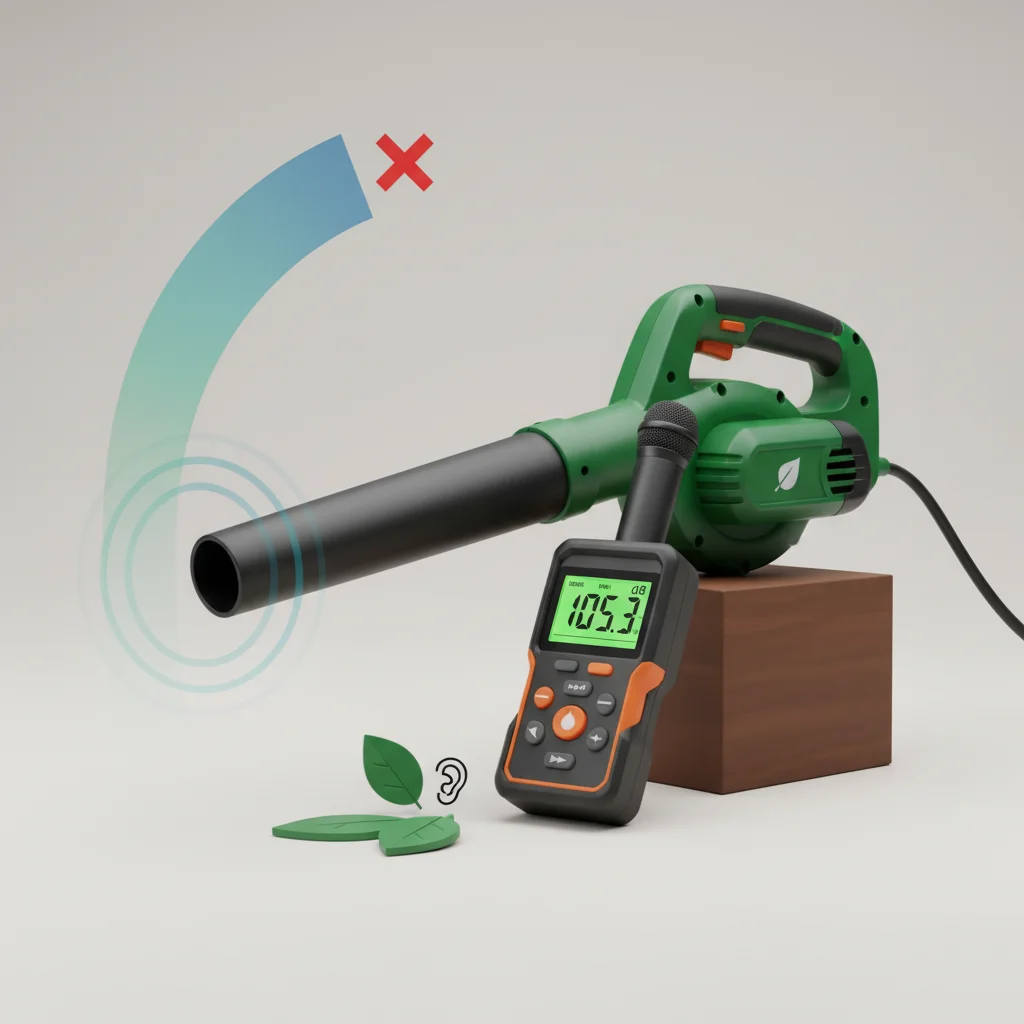
Understanding leaf blower decibels is crucial for both user safety and neighborhood peace. Generally, a leaf blower operating above 65-70 decibels (dB) is considered too loud for extended use without hearing protection and can be a nuisance to neighbors. Many residential areas have ordinances limiting noise levels, often around 65 dB at property lines. For personal safety, prolonged exposure to sounds above 85 dB can cause permanent hearing damage, making hearing protection essential for most gas and powerful electric models.
What Are Typical Leaf Blower Noise Levels?
Leaf blower noise levels vary significantly by type and power source. Electric corded models typically range from 60-75 dB, making them the quietest option. Cordless battery-powered blowers fall into a similar range, often between 65-80 dB, with some high-performance models pushing higher. Gas-powered leaf blowers are generally the loudest, with handheld units producing 70-85 dB and backpack models often exceeding 90 dB. Commercial-grade gas blowers can even reach 100 dB or more, necessitating strict adherence to hearing protection guidelines.
The Impact of Decibel Levels on Hearing Health
Exposure to high decibel levels can have serious long-term effects on hearing. The Occupational Safety and Health Administration (OSHA) recommends hearing protection for noise levels at or above 85 dB averaged over 8 hours. For every 3 dB increase above 85 dB, the permissible exposure time is halved. This means that a leaf blower operating at 90 dB can cause damage in just 2 hours of continuous use. Symptoms of noise-induced hearing loss include ringing in the ears (tinnitus), difficulty understanding speech in noisy environments, and a gradual loss of hearing sensitivity.
Choosing a Quieter Leaf Blower
|
Our Picks for the Best Leaf Blower in 2026
As an Amazon Associate I earn from qualifying purchases.
|
||
| Num | Product | Action |
|---|---|---|
| 1 | EGO POWER+ Leaf Blower, Cordless Electric 530 CFM, Battery and Charger Not Included - LB5300 |

|
| 2 | WORX 12 Amp Electric Leaf Blower, Turbine Blower for Lawn Care with 600 CFM & 2 Speed Control, Corded, WG520 |
|
| 3 | DEWALT 20V MAX Blower, 100 CFM Airflow, Variable Speed Switch, Includes Trigger Lock, Bare Tool Only (DCE100B) |
|
| 4 | MZK Cordless Leaf Blower,20V Battery Powered Electric Blower for Lawn Care, Electric Lightweight Leaf Blower for Blowing Leaves, Patio Cleaning and Dust(2 * 2Ah Battery & Charger Included),LF40D13 |
|
| 5 | WORX Cordless Leaf Blower, Electric Blower with Turbine Fan, Blowers for Lawn Care with 2 Speed Control, Battery & Charger Included, WG547 |
|
| 6 | Electric Leaf Blower Cordless, 21V Battery Powered Blower with 2 x 4.0Ah Battery and Charge, 715CFM &180MPH and 3 Speed Mode, Brushless Handheld Blowers for Lawn Care, Yard, Leaves, Dust, Snow |
|
| 7 | 6-Speed Modes Cordless Leaf Blower 21V,200MPH High-Velocity Electric Blower,Lightweight for Dry/Wet Leaves,Lawn Debris,Garage and Driveway Cleaning,Red |
|
| 8 | 20V Handheld Electric Cordless Leaf Blower with 2.0Ah Battery & Fast Charger, Powerful up to 93 MPH, 350 CFM Stepless Speed Control, Powerful for Yard Cleaning |
|
| 9 | BLACK+DECKER Electric Leaf Blower, Handheld Blowers for Lawn Care, Lightweight, 180 MPH 180 CFM, 7-Amp, Corded (LB700) |
|
| 10 | BLACK + DECKER Electric Leaf Blower, Hand Held Blowers for Lawn Care, Up to 450 CFM and 140 MPH Power, Axial, Lightweight, Corded (BEBL750) |
|
If noise is a primary concern, several factors can guide your purchase. Electric models, both corded and battery-powered, are inherently quieter than gas models. Look for specifications that list the decibel rating, often found in product descriptions. Some manufacturers specifically design ‘low-noise’ or ‘whisper series’ models that prioritize quiet operation. While these may offer slightly less power than their louder counterparts, the trade-off can be worthwhile for residential use. Consider the size of your yard and the type of debris you typically clear; a less powerful, quieter blower might be perfectly adequate.
- Check the manufacturer’s specified decibel rating.
- Opt for electric (corded or battery) over gas models.
- Look for ‘low-noise’ or ‘whisper’ series products.
- Consider the CFM (Cubic Feet per Minute) and MPH (Miles Per Hour) in relation to noise.
- Read user reviews for real-world noise feedback.
Noise Reduction Strategies for Existing Leaf Blowers
Even if you own a louder leaf blower, there are steps you can take to mitigate its noise output and protect your hearing. Always wear appropriate hearing protection, such as earmuffs or earplugs, especially when operating gas models. Regular maintenance, including cleaning air filters and ensuring all components are securely fastened, can prevent unnecessary rattling and improve efficiency, which sometimes reduces noise. Operating the blower at lower throttle settings when possible can also decrease decibel levels. Additionally, be mindful of the time of day you use your leaf blower to avoid disturbing neighbors, particularly during early mornings or late evenings.
For those seeking a balance of power and reduced noise, theoffers an excellent compromise, delivering strong airflow without the ear-splitting roar of traditional gas models. Its advanced motor design significantly cuts down on operational noise, making it a favorite among homeowners in noise-sensitive communities.
Local Noise Ordinances and Community Considerations
Before purchasing or using a leaf blower, it’s wise to check your local noise ordinances. Many municipalities have specific rules regarding acceptable noise levels and operating hours for power equipment. These ordinances are often put in place to maintain peace and quiet within residential areas. Adhering to these regulations not only avoids potential fines but also fosters good neighborly relations. Choosing a quieter model or using your existing blower during permitted hours demonstrates consideration for your community. For heavy-duty tasks where noise is unavoidable, theprovides robust performance while still meeting many professional noise standards, making it a reliable choice for larger properties.
Get our weekly buyer guide
Practical specs, not advice. Unsubscribe anytime.
