Maintaining a pristine large yard requires more than just a mower; when autumn arrives, a powerful leaf blower becomes an indispensable ally. For sprawling properties, gas-powered leaf blowers are often the preferred choice, offering the robust performance and extended runtime needed to tackle vast amounts of leaves and debris without the limitations of cords or battery life. If you’re an experienced technician or a dedicated homeowner looking for the most efficient and reliable tools, selecting the right gas leaf blower can significantly cut down your yard work time and effort. This guide provides an in-depth look at the leading gas leaf blowers for large yards in 2026, offering insights into their technology, performance, and what makes them stand out.
Overview of Leaf Blowers
A leaf blower is a garden tool that propels air out of a nozzle to move debris such as leaves and grass cuttings. These powerful machines have evolved significantly from their earliest forms, becoming essential for efficient property maintenance. Initially designed for agricultural tasks, leaf blowers gained popularity in the 1970s for landscaping. Today, they are categorized by their power source and design, including handheld, backpack, and walk-behind models.
For large properties, gas leaf blowers are particularly advantageous due to their superior power output and unrestricted mobility. They are built to handle demanding tasks, from clearing large piles of wet leaves to moving stubborn debris across expansive areas. While other types exist, gas models continue to dominate the heavy-duty segment. For shop curated leaf blower on this site.
Classifying Leaf Blowers by Power Source
Leaf blowers are broadly categorized by their power source, each offering distinct advantages and drawbacks. Understanding these differences is crucial for selecting the optimal tool for your specific yard.
Electric-Powered Leaf Blowers
Electric leaf blowers are typically lightweight, easy to start, and produce less noise and zero emissions compared to gas models. They are generally more affordable and require minimal maintenance, making them a popular choice for smaller yards or paved areas near an outdoor power outlet. Their main limitation is the need for a power cord, which restricts mobility and range, or a battery, which limits runtime.
Gas-Powered Leaf Blowers
Gas-powered leaf blowers are the workhorses of yard cleanup, renowned for their unmatched power and complete freedom of movement. Ideal for large properties, they can effortlessly clear heavy, wet leaves, sticks, and other stubborn debris. These machines come with either two-stroke or four-stroke engines, with two-stroke models generally requiring a fuel-oil mixture.
However, gas blowers are typically heavier, noisier, and produce exhaust emissions. They require more maintenance, including fuel mixing, filter cleaning, and routine engine tune-ups, and can be more challenging to start with a pull cord. Despite these considerations, their power and runtime capabilities make them indispensable for extensive yard work.
Battery-Powered Leaf Blowers
Battery-powered leaf blowers offer a compelling middle ground, combining the mobility of gas models with the lower noise and zero emissions of electric options. Significant advancements in battery technology have enabled these blowers to deliver impressive power, often rivaling some gas handheld units. They are quiet, easy to start, and require less maintenance than gas models.
The primary disadvantages include a limited runtime, dictated by battery capacity, and a higher initial cost for the unit and spare batteries. They are well-suited for medium to large yards where the noise of a gas blower might be an issue, or where quick, cord-free operation is valued.
Detailed Comparison of Leaf Blowers
When selecting a leaf blower, understanding the specific metrics and design choices can make a significant difference in performance and user experience. Here’s a breakdown of key aspects:
| Feature | Gas-Powered Leaf Blowers | Battery-Powered Leaf Blowers | Electric (Corded) Leaf Blowers |
|---|---|---|---|
| Power | Highest CFM and MPH, ideal for heavy debris and large areas | High power, often rivaling gas handhelds; suitable for moderate to heavy debris | Moderate power, best for light debris and smaller areas |
| Mobility | Unlimited, no cords | Cordless, excellent mobility (limited by battery runtime) | Restricted by cord length |
| Runtime | Unlimited (as long as fuel is available) | Limited by battery life (typically 20-60 minutes) | Unlimited (as long as plugged in) |
| Weight | Generally heaviest, especially backpack models | Moderate (battery adds weight) | Lightest |
| Noise Level | Highest (often 70+ dB(A) at operator’s ear, some over 100 dB) | Low to moderate (typically 60-75 dB) | Lowest (typically 60-70 dB) |
| Emissions | Yes (exhaust fumes) | No | No |
| Maintenance | High (fuel mixing, filter cleaning, spark plug, engine tune-ups) | Low (battery charging, occasional cleaning) | Very low (occasional cleaning) |
| Starting | Pull-start (can be challenging) | Push-button | Push-button |
| Cost | Moderate to high | High (initial cost for unit and batteries) | Low |
| Best Use | Large to extra-large yards, heavy-duty commercial work, wet leaves | Medium to large yards, noise-sensitive areas, convenient cordless operation | Small yards, paved areas, light cleanup |
Gas leaf blowers still hold a significant edge in raw power and continuous runtime, making them the top choice for clearing extensive landscapes. However, advancements in battery technology mean electric models are increasingly capable, offering a more eco-friendly and user-friendly alternative for certain tasks.
Crucial Criteria for Choosing a Leaf Blower
Selecting the ideal gas leaf blower for a large yard involves evaluating several key factors to match the tool to your specific needs and environment. Considering these criteria will ensure you invest in a machine that delivers both performance and comfort.
Defining Your Usage Needs
Before anything else, assess the scope of your yard work. How large is the area you need to clear? What type of debris do you typically encounter—dry leaves, wet clumps, small sticks, or even light snow? How often will you be using the blower? For large yards with heavy debris and frequent use, a powerful gas-powered backpack blower is generally the most effective choice, providing ample power and long runtime.
Engine Power and Performance Metrics
The core of a gas leaf blower’s capability lies in its engine power and the resulting air movement. Two primary metrics define this performance:
- Cubic Feet per Minute (CFM): This measures the volume of air the blower moves. A higher CFM rating means the blower can push more leaves and debris at once, making it incredibly efficient for clearing large areas rapidly. For large yards, look for models with 500 CFM or higher.
- Miles Per Hour (MPH): This indicates the speed of the air exiting the nozzle. Higher MPH translates to a stronger, more concentrated force, essential for dislodging stubborn, wet, or compacted debris like matted leaves or small stones. A good MPH for heavy-duty tasks is over 150 MPH.
For optimal performance in large yards, aim for a blower that offers a high balance of both CFM and MPH. A blower with both high air volume and high air speed can move large piles quickly and tackle resilient debris effectively.
Weight and Ergonomics
Working on a large property means extended periods of operation, making the blower’s weight and ergonomic design critical for user comfort and reducing fatigue. Backpack leaf blowers distribute the engine’s weight across your back, which is far more comfortable than holding a heavy handheld unit for hours. Look for models with padded straps, a comfortable backrest, and an adjustable harness system. Features like anti-vibration technology and accessible controls on a tube or hip-mounted throttle also enhance usability during long tasks.
Noise Level
Gas leaf blowers are inherently louder than electric models due to their combustion engines. However, noise levels vary between models, and this can be a significant consideration if you live in a residential area or simply prefer a quieter experience. Noise is typically measured in decibels (dB). While professional-grade blowers often exceed 70 dB(A) at the operator’s ear, some are designed with better sound dampening. Always wear appropriate hearing protection when operating gas leaf blowers.
Additional Features
Modern gas leaf blowers often come with features that enhance convenience and versatility:
- Vacuum and Mulching Capabilities: Some handheld models can convert into a leaf vacuum, collecting leaves into a bag and often mulching them to reduce volume. While less common on powerful backpack blowers, this can be useful for smaller cleanup tasks or detailed work.
- Variable Speed Control: This allows you to adjust the airflow for different tasks, from gentle clearing around delicate plants to full power for dense leaf piles. Cruise control settings can lock in a desired speed, reducing hand fatigue during long jobs.
- Easy Start Systems: Many contemporary gas blowers include technologies like spring-assist pull-starts or automatic carburetor purges to make starting less strenuous and more reliable. This is a welcome feature for anyone who has struggled with a stubborn pull cord.
- Nozzle Attachments: Different nozzles can optimize airflow for various applications, such as a wider nozzle for broad clearing or a concentrated tip for dislodging stuck debris.
Brand Reputation and Price
Investing in a reputable brand often translates to better build quality, reliable performance, and readily available parts and service. Brands like Stihl, Echo, and Husqvarna are consistently top-rated for their gas leaf blowers, offering professional-grade tools that withstand rigorous use. While these may come with a higher price tag, the durability and performance often justify the investment for large properties. Compare models within your budget, considering the long-term value.
Top 10 Gas Leaf Blowers for Large Yards in 2026
For homeowners and professionals with expansive properties, a powerful and reliable gas leaf blower is a game-changer. Here are 10 of the best gas leaf blowers currently available or highly anticipated for 2026, known for their exceptional performance, durability, and features suitable for demanding tasks.
-
Echo PB-9010T Backpack Blower
The Echo PB-9010T stands out as one of the most powerful backpack blowers on the market, boasting a formidable 79.9cc engine. It delivers an incredible 1110 CFM and 220 MPH, generating up to 52 Newtons of blowing force, making it ideal for the heaviest and wettest debris across very large properties. Its comfortable harness system and large 84-ounce fuel tank ensure extended, comfortable operation.- Pros: Extreme power, high CFM and MPH, large fuel tank, comfortable harness.
- Cons: Very loud, heavier when full.
- Specs: 79.9cc, 1110 CFM, 220 MPH, 48-52N, 26.7 lbs.
-
Stihl BR 800 C-E Magnum Backpack Blower
A favorite among professionals, the Stihl BR 800 C-E Magnum (or BR 800 X Magnum) combines impressive power with user-friendly features. Its 79.9cc engine produces 912 CFM and a blazing 239 MPH, with 41 Newtons of blowing force. The standout feature is its easy side-start design, allowing users to restart the blower without removing it from their back, a significant convenience during long jobs.- Pros: Powerful airflow, very high air speed, easy side-start, comfortable.
- Cons: Premium price.
- Specs: 79.9cc, 912 CFM, 239 MPH, 41N, 25.8 lbs, 78 dB(A).
-
Husqvarna 360BT Gas Backpack Blower
The Husqvarna 360BT is a top-tier backpack blower designed for serious leaf-clearing tasks on large properties. Equipped with a 65.6cc engine, it generates 890 CFM and a powerful 232 MPH, easily tackling substantial piles of foliage. It features an ergonomic harness with a padded backrest, shoulder straps, and a hip belt for comfortable prolonged use, along with SmartStart technology for easier ignition.- Pros: Tremendous power, ergonomic design, easy to start.
- Cons: Very loud operation.
- Specs: 65.6cc, 890 CFM, 232 MPH, 23.2 lbs.
-
Husqvarna 580BFS/580BTS Backpack Blower
For those demanding even more power, the Husqvarna 580BFS/580BTS offers a massive 75cc engine, delivering an impressive 1000 CFM and 220 MPH with 47 Newtons of blowing force. This professional-grade blower is built for extreme conditions and extended use, featuring an 87-ounce fuel tank and X-Torq engine technology for improved fuel efficiency and reduced emissions.- Pros: Exceptional power and air volume, fuel efficient, large fuel tank, robust design.
- Cons: Heavy, premium cost.
- Specs: 75cc, 1000 CFM, 220 MPH, 47N.
-
Stihl BR 600 Backpack Blower
The Stihl BR 600 remains a highly respected and popular choice, offering an excellent balance of power, comfort, and reliability. Its 64.8cc engine provides 677 CFM and 199 MPH, making it highly effective for large residential properties. Known for its durable construction and comfortable backpack harness, it’s a solid investment for consistent heavy-duty use.- Pros: Balanced power and weight, durable, comfortable for extended use.
- Cons: Not as powerful as the BR 800 series.
- Specs: 64.8cc, 677 CFM, 199 MPH.
-
Echo PB-580TAA Backpack Blower
The Echo PB-580TAA offers strong performance in a slightly more accessible package. Its 58.2cc engine produces 517 CFM and 216 MPH, with 22 Newtons of blowing force, making it capable of handling significant leaf accumulation. It features a tube-mounted throttle for convenient control and a comfortable backpack design, ideal for homeowners with large yards needing reliable power.- Pros: Good balance of power and value, comfortable harness, tube throttle.
- Cons: Not as high CFM as top-tier models.
- Specs: 58.2cc, 517 CFM, 216 MPH, 22N.
-
Craftsman BP510 600-CFM Gas Backpack Leaf Blower
The Craftsman BP510 is a strong contender for large yards, offering 600 CFM and 220 MPH from its 51cc 2-cycle engine. It’s designed with user comfort in mind, featuring anti-vibration technology and a chest strap harness system for balance. This model provides substantial power at a competitive price, making it an excellent value for homeowners with extensive leaf-clearing needs.- Pros: Powerful performance for the price, comfortable design, good CFM and MPH.
- Cons: May have more plastic components than professional models.
- Specs: 51cc, 600 CFM, 220 MPH.
-
Prorun PBB2884 Backpack Blower
The Prorun PBB2884 offers impressive specifications with a 75.6cc 2-cycle engine, generating a powerful 1020 CFM. While its MPH isn’t explicitly listed, the high CFM indicates its capability to move very large volumes of leaves. This model provides a robust solution for heavy-duty yard work and is often available at a competitive price point.- Pros: Very high CFM, powerful engine.
- Cons: Specific MPH not readily available, less established brand reputation.
- Specs: 75.6cc, 1020 CFM.
-
Ryobi 2 Cycle Jet Fan Gas Leaf Blower (Handheld)
While a handheld, the Ryobi 2 Cycle Jet Fan stands out for its astonishing power, making it suitable for larger areas where a handheld is preferred for maneuverability. Its 25cc engine delivers 520 CFM and 160 MPH, utilizing an inline jet fan design for efficient airflow. It includes user-friendly features like cruise control and a variable speed trigger, offering professional-grade performance in a handheld form.- Pros: Very powerful for a handheld, excellent value, user-friendly controls.
- Cons: Handheld weight can be a factor for extended use, potentially less durable than professional backpack models.
- Specs: 25cc, 520 CFM, 160 MPH, 11.5 lbs.
-
Echo PB-2620 Handheld Blower
For those who prefer a handheld unit but still require significant power for larger sections of their yard, the Echo PB-2620 is a top performer. As part of Echo’s X-Series, this 25.4cc blower delivers 456 CFM and 172 MPH, providing 15.8 Newtons of blowing force. It’s lightweight and easy to maneuver, with a variable speed trigger and cruise control, making it a strong choice for quick yet powerful cleanup.- Pros: Strongest handheld performance, lightweight, competitive pricing.
- Cons: Not as much raw power or runtime as backpack models.
- Specs: 25.4cc, 456 CFM, 172 MPH, 15.8N, 9.8 lbs, 70 dB(A).
 A powerful gas-powered backpack leaf blower in action, clearing a vast lawn full of autumn leaves.
Operating and Maintaining Your Gas Leaf Blower
Proper use and regular maintenance are essential for maximizing the performance and extending the lifespan of your gas leaf blower. Adhering to these guidelines ensures safe and efficient operation.
Safe Usage Practices
Always prioritize safety when operating a gas leaf blower. Wear appropriate personal protective equipment (PPE), including hearing protection, safety glasses, and sturdy gloves. Ensure bystanders, children, and pets are a safe distance away from the operating area. Never point the blower nozzle at people or animals. Be mindful of dust and debris, especially in dry conditions, and avoid blowing towards busy streets or public pathways. Check local ordinances, as some areas have restrictions on gas leaf blower use due to noise or emissions.
Routine Maintenance for Longevity
Gas leaf blowers require consistent maintenance to function optimally.
- Fuel Management: Always use fresh, high-octane gasoline mixed with the correct two-stroke oil ratio if your blower has a 2-cycle engine. Avoid using stale fuel, which can cause engine problems. For storage longer than 60 days, add a fuel stabilizer to prevent gas degradation.
- Air Filter Cleaning: Remove and clean the air filter after every 10 hours of use, or more frequently in dusty conditions. A clogged filter can restrict airflow and reduce engine performance. Replace it if it’s excessively dirty or damaged.
- Spark Plug Check: Inspect the spark plug periodically for wear or carbon buildup. Clean or replace it as needed to ensure reliable starting and efficient combustion.
- Cooling Fins: Keep the engine’s cooling fins clean and free of debris to prevent overheating.
- General Cleaning: Wipe down the exterior of the blower after each use, ensuring no debris is lodged in the air intake or around moving parts.
- Storage: Store your leaf blower in a clean, dry place. If storing for the off-season, drain the fuel tank or run the engine until it’s out of fuel, and consider a fuel stabilizer.
Following these maintenance steps will keep your gas leaf blower running smoothly for years, making your yard work easier and more effective.
Environmental Considerations for Leaf Blower Use
While gas leaf blowers offer unparalleled power, it’s important to use them responsibly to minimize their environmental impact and reduce disturbances in your community. Thoughtful operation can make a big difference.
To mitigate noise pollution, consider using your leaf blower during reasonable hours, respecting local noise ordinances, which often restrict use early in the morning or late in the evening. Opt for models with lower decibel ratings if possible, and always wear hearing protection yourself.
Regarding air quality, gas blowers produce exhaust emissions and can kick up significant dust and allergens. To minimize this, use your blower when leaves are dry to reduce dust, and avoid operating it on windy days when debris can spread widely. Collect blown leaves and compost them or dispose of them properly, rather than simply blowing them into the street or neighboring properties. Supporting manufacturers who incorporate fuel-efficient, low-emission engine technologies, like Husqvarna’s X-Torq, is another positive step.
Conclusion
Choosing the ideal gas leaf blower for a large yard involves a careful assessment of power, ergonomics, and specific features that align with your property’s needs. The top models for 2026, such as the Echo PB-9010T and Stihl BR 800 C-E Magnum, exemplify the pinnacle of performance, offering exceptional CFM and MPH to tackle even the most demanding leaf-clearing challenges. While these gas-powered titans require more maintenance and generate more noise than their electric counterparts, their unmatched runtime and sheer force make them indispensable for expansive properties. By prioritizing safety, adhering to maintenance schedules, and being mindful of environmental impact, you can ensure your gas leaf blower remains a powerful and effective tool for a beautifully maintained landscape.
What specific challenges do you face with leaf removal on your large property that a new gas leaf blower could help solve?
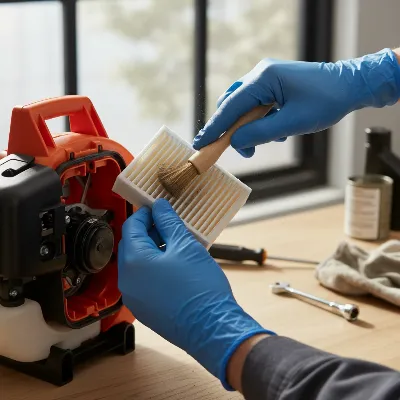 A person performing routine maintenance on a gas leaf blower, cleaning the air filter.
Frequently Asked Questions
What is the ideal CFM and MPH for a gas leaf blower for large yards?
For large yards, look for a gas leaf blower with a CFM of 500 or higher and an MPH of 150 or more. This combination ensures enough air volume to move large piles of leaves and sufficient speed to dislodge wet or stubborn debris effectively.
Are gas leaf blowers being banned?
Some cities and states are implementing bans or phasing out gas-powered leaf blowers due to concerns over noise pollution and emissions. California, for example, has banned the sale of new gas-powered yard equipment as of 2024. Always check your local regulations before purchasing.
How often should I perform maintenance on my gas leaf blower?
Routine maintenance, such as cleaning the air filter, should be done after every 10 hours of use or more frequently in dusty conditions. Additionally, always use fresh fuel with the correct oil mixture and add a fuel stabilizer if storing the blower for more than 60 days.
What is the difference between handheld and backpack gas leaf blowers?
Handheld gas blowers are lighter and more maneuverable for quick cleanups in smaller to medium areas. Backpack gas blowers are heavier but distribute the weight across your back, making them more comfortable for extended use and offering significantly more power for large yards and heavy debris.
Can a gas leaf blower also vacuum and mulch leaves?
Some handheld gas leaf blowers come with a kit that allows them to convert into a leaf vacuum and mulcher. While less common for powerful backpack models, this feature can be very convenient for collecting and reducing the volume of leaves.
Why do some gas leaf blowers list “Newtons” in their specs?
Newtons measure the raw blowing force of a leaf blower, providing a standardized metric that accounts for both air volume (CFM) and air speed (MPH). A higher Newton rating indicates a more powerful blower, capable of moving heavier and more resistant debris.
Get our weekly buyer guide
Practical specs, not advice. Unsubscribe anytime.
