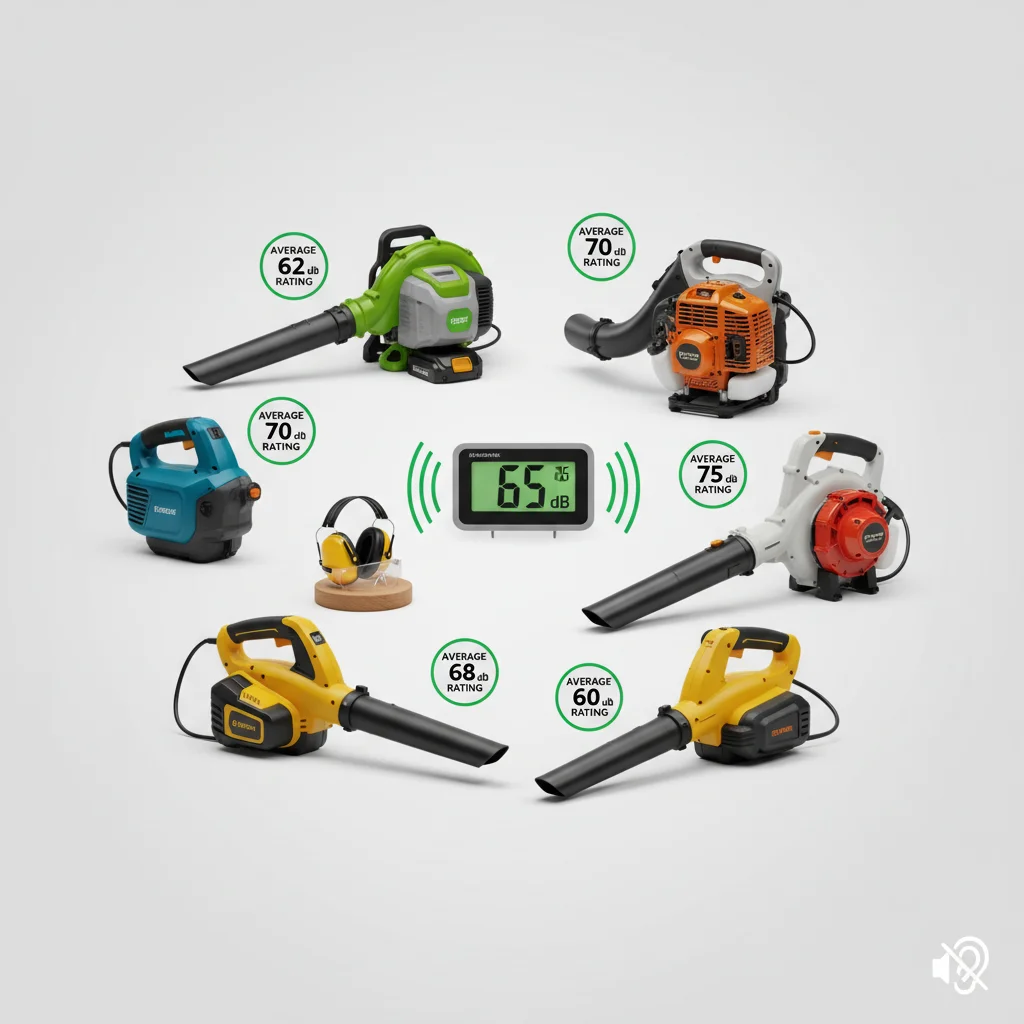
Understanding safe leaf blower noise levels is crucial for protecting your hearing and complying with local regulations. Generally, a safe decibel range for prolonged exposure to leaf blower noise is below 85 dB. Operating a leaf blower above this threshold for extended periods can lead to permanent hearing damage. Many modern leaf blowers are designed with noise reduction in mind, but it’s essential to be aware of the specific decibel rating of your model and take appropriate precautions.
Why Leaf Blower Noise Matters
The sound produced by leaf blowers, particularly gas-powered models, can be surprisingly loud. Exposure to high decibel levels can cause noise-induced hearing loss, tinnitus, and other auditory issues. Beyond personal health, excessive noise can also be a nuisance to neighbors, leading to complaints and potential fines in areas with strict noise ordinances. Being informed about decibel ratings helps you make responsible choices for both your health and your community.
Understanding Decibel Ratings
Decibels (dB) are a logarithmic unit used to measure sound intensity. A small increase in decibel numbers represents a significant increase in sound power. For instance, a 10 dB increase means the sound is perceived as twice as loud. Most leaf blowers will list their decibel rating in their specifications, often measured at the operator’s ear or at a certain distance. Always check these specifications before purchasing to ensure you’re selecting a model that aligns with your noise tolerance and local regulations.
- Gas-powered leaf blowers typically range from 95 dB to 115 dB.
- Electric corded leaf blowers usually fall between 65 dB and 80 dB.
- Cordless battery-powered leaf blowers are often the quietest, ranging from 60 dB to 75 dB.
- Prolonged exposure above 85 dB requires hearing protection.
- Some cities have noise ordinances limiting operation to 65-70 dB at property lines.
Choosing a Quieter Leaf Blower
|
Our Picks for the Best Leaf Blower in 2026
As an Amazon Associate I earn from qualifying purchases.
|
||
| Num | Product | Action |
|---|---|---|
| 1 | BLACK + DECKER Electric Leaf Blower, Hand Held Blowers for Lawn Care, Up to 450 CFM and 140 MPH Power, Axial, Lightweight, Corded (BEBL750) |

|
| 2 | 20V Handheld Electric Cordless Leaf Blower with 2.0Ah Battery & Fast Charger, Powerful up to 93 MPH, 350 CFM Stepless Speed Control, Powerful for Yard Cleaning |
|
| 3 | EGO POWER+ Leaf Blower, Cordless Electric 530 CFM, Battery and Charger Not Included - LB5300 |
|
| 4 | 6-Speed Modes Cordless Leaf Blower 21V,200MPH High-Velocity Electric Blower,Lightweight for Dry/Wet Leaves,Lawn Debris,Garage and Driveway Cleaning,Red |
|
| 5 | DEWALT 20V MAX Blower, 100 CFM Airflow, Variable Speed Switch, Includes Trigger Lock, Bare Tool Only (DCE100B) |
|
| 6 | WORX 12 Amp Electric Leaf Blower, Turbine Blower for Lawn Care with 600 CFM & 2 Speed Control, Corded, WG520 |
|
| 7 | WORX Cordless Leaf Blower, Electric Blower with Turbine Fan, Blowers for Lawn Care with 2 Speed Control, Battery & Charger Included, WG547 |
|
| 8 | Electric Leaf Blower Cordless, 21V Battery Powered Blower with 2 x 4.0Ah Battery and Charge, 715CFM &180MPH and 3 Speed Mode, Brushless Handheld Blowers for Lawn Care, Yard, Leaves, Dust, Snow |
|
| 9 | BLACK+DECKER Electric Leaf Blower, Handheld Blowers for Lawn Care, Lightweight, 180 MPH 180 CFM, 7-Amp, Corded (LB700) |
|
| 10 | MZK Cordless Leaf Blower,20V Battery Powered Electric Blower for Lawn Care, Electric Lightweight Leaf Blower for Blowing Leaves, Patio Cleaning and Dust(2 * 2Ah Battery & Charger Included),LF40D13 |
|
If noise is a primary concern, consider opting for an electric or battery-powered leaf blower. These models are significantly quieter than their gas counterparts and are often sufficient for residential use. When evaluating models, look for those explicitly marketed as ‘low noise’ or ‘quiet operation.’ While they may not have the raw power of some gas models, the reduction in noise can greatly improve the user experience and neighbor relations.
Essential Hearing Protection
Regardless of your leaf blower’s decibel rating, it’s always wise to wear hearing protection, especially if you’ll be operating it for more than a few minutes. Earplugs and earmuffs are effective options. Earplugs are small and fit directly into the ear canal, while earmuffs cover the entire ear. Look for hearing protection with a high Noise Reduction Rating (NRR) to ensure adequate protection. A minimum NRR of 25 dB is recommended for most leaf blower use.
Local Noise Ordinances and Compliance
Before operating any leaf blower, it’s prudent to check your local city or county noise ordinances. Many municipalities have specific rules regarding acceptable noise levels and operating hours for outdoor power equipment. These regulations are often put in place to maintain peace and quiet within residential areas. Non-compliance can result in fines or other penalties. Being aware of and adhering to these rules demonstrates good neighborly conduct and helps avoid potential conflicts.
Get our weekly buyer guide
Practical specs, not advice. Unsubscribe anytime.
