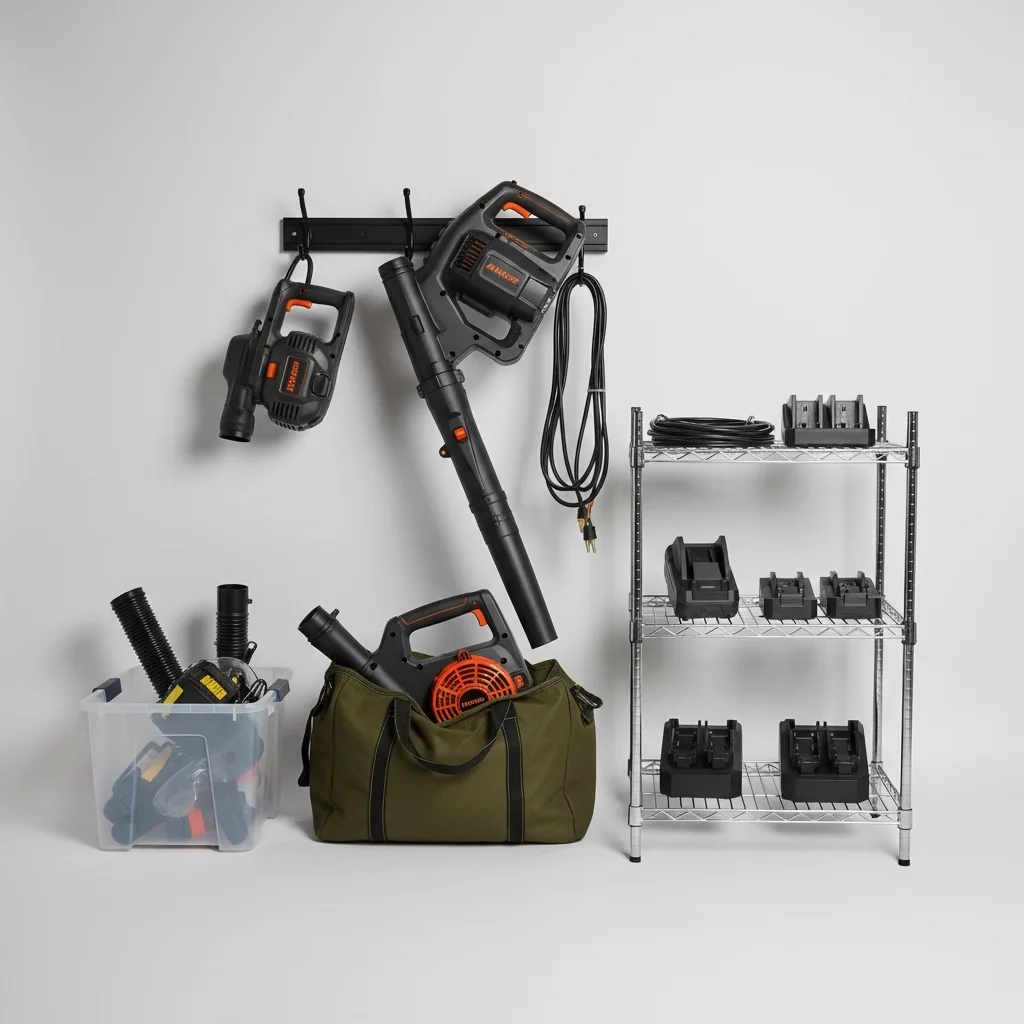
Proper leaf blower storage is crucial for extending the lifespan of your equipment and ensuring it’s ready for action when you need it. There are five key steps to effectively store your leaf blower, whether it’s for a short period or the off-season. Neglecting these steps can lead to carburetor issues, fuel degradation, and even damage to the engine components, costing you time and money in repairs.
Clean Your Leaf Blower Thoroughly
Before storing your leaf blower, a thorough cleaning is essential. Remove any leaves, dirt, and debris from the air intake, fan, and exhaust areas. Use a brush or compressed air to dislodge stubborn grime. For gas models, wipe down the exterior with a damp cloth. For electric and battery-powered units, ensure all vents are clear. A clean machine prevents corrosion and keeps pests from nesting in crevices during storage.
Stabilize or Drain Fuel (Gas Models)
For gas leaf blowers, managing the fuel is perhaps the most critical storage step. You have two primary options: either drain the fuel completely or use a fuel stabilizer. If storing for less than a month, a high-quality fuel stabilizer mixed according to product instructions can prevent fuel breakdown and gumming in the carburetor. For longer storage, it’s best to drain the fuel tank and then run the engine until it sputters and dies, ensuring all fuel is out of the carburetor. This prevents ethanol-related damage and keeps the fuel system clean.
Remove and Store Batteries (Cordless Models)
|
Our Picks for the Best Leaf Blower in 2026
As an Amazon Associate I earn from qualifying purchases.
|
||
| Num | Product | Action |
|---|---|---|
| 1 | WORX 12 Amp Electric Leaf Blower, Turbine Blower for Lawn Care with 600 CFM & 2 Speed Control, Corded, WG520 |

|
| 2 | WORX Cordless Leaf Blower, Electric Blower with Turbine Fan, Blowers for Lawn Care with 2 Speed Control, Battery & Charger Included, WG547 |
|
| 3 | BLACK+DECKER Electric Leaf Blower, Handheld Blowers for Lawn Care, Lightweight, 180 MPH 180 CFM, 7-Amp, Corded (LB700) |
|
| 4 | Electric Leaf Blower Cordless, 21V Battery Powered Blower with 2 x 4.0Ah Battery and Charge, 715CFM &180MPH and 3 Speed Mode, Brushless Handheld Blowers for Lawn Care, Yard, Leaves, Dust, Snow |
|
| 5 | BLACK + DECKER Electric Leaf Blower, Hand Held Blowers for Lawn Care, Up to 450 CFM and 140 MPH Power, Axial, Lightweight, Corded (BEBL750) |
|
| 6 | MZK Cordless Leaf Blower,20V Battery Powered Electric Blower for Lawn Care, Electric Lightweight Leaf Blower for Blowing Leaves, Patio Cleaning and Dust(2 * 2Ah Battery & Charger Included),LF40D13 |
|
| 7 | 6-Speed Modes Cordless Leaf Blower 21V,200MPH High-Velocity Electric Blower,Lightweight for Dry/Wet Leaves,Lawn Debris,Garage and Driveway Cleaning,Red |
|
| 8 | 20V Handheld Electric Cordless Leaf Blower with 2.0Ah Battery & Fast Charger, Powerful up to 93 MPH, 350 CFM Stepless Speed Control, Powerful for Yard Cleaning |
|
| 9 | EGO POWER+ Leaf Blower, Cordless Electric 530 CFM, Battery and Charger Not Included - LB5300 |
|
| 10 | DEWALT 20V MAX Blower, 100 CFM Airflow, Variable Speed Switch, Includes Trigger Lock, Bare Tool Only (DCE100B) |
|
For cordless leaf blowers, always remove the battery before storage. Store the battery in a cool, dry place, ideally at a charge level between 40% and 60%. Storing fully charged or fully depleted batteries for extended periods can reduce their overall lifespan and capacity. Keep batteries away from extreme temperatures, as this can severely impact their performance and safety.
Inspect and Maintain Components
Before putting your leaf blower away, take a moment to inspect key components. Check the air filter and clean or replace it if necessary. Examine the spark plug on gas models and replace it if it’s fouled or worn. Tighten any loose screws or bolts. Lubricate any moving parts as recommended by the manufacturer’s manual. Addressing minor issues now can prevent major problems later. This proactive maintenance ensures your blower is in top condition for its next use.
Choose the Right Storage Location
The ideal storage location is dry, cool, and protected from direct sunlight and extreme temperatures. A garage, shed, or utility closet works well. Avoid storing your leaf blower outdoors, even under a cover, as moisture and temperature fluctuations can cause damage. For gas models, store them upright to prevent fuel or oil leaks. Consider using a wall mount or shelf to keep the blower off the floor, protecting it from potential dampness and freeing up floor space.
- Always clean your leaf blower thoroughly before storage.
- For gas models, either drain the fuel or use a stabilizer.
- Remove batteries from cordless units and store them properly.
- Inspect and maintain all components to prevent future issues.
- Store your leaf blower in a dry, cool, and protected environment.
Get our weekly buyer guide
Practical specs, not advice. Unsubscribe anytime.
