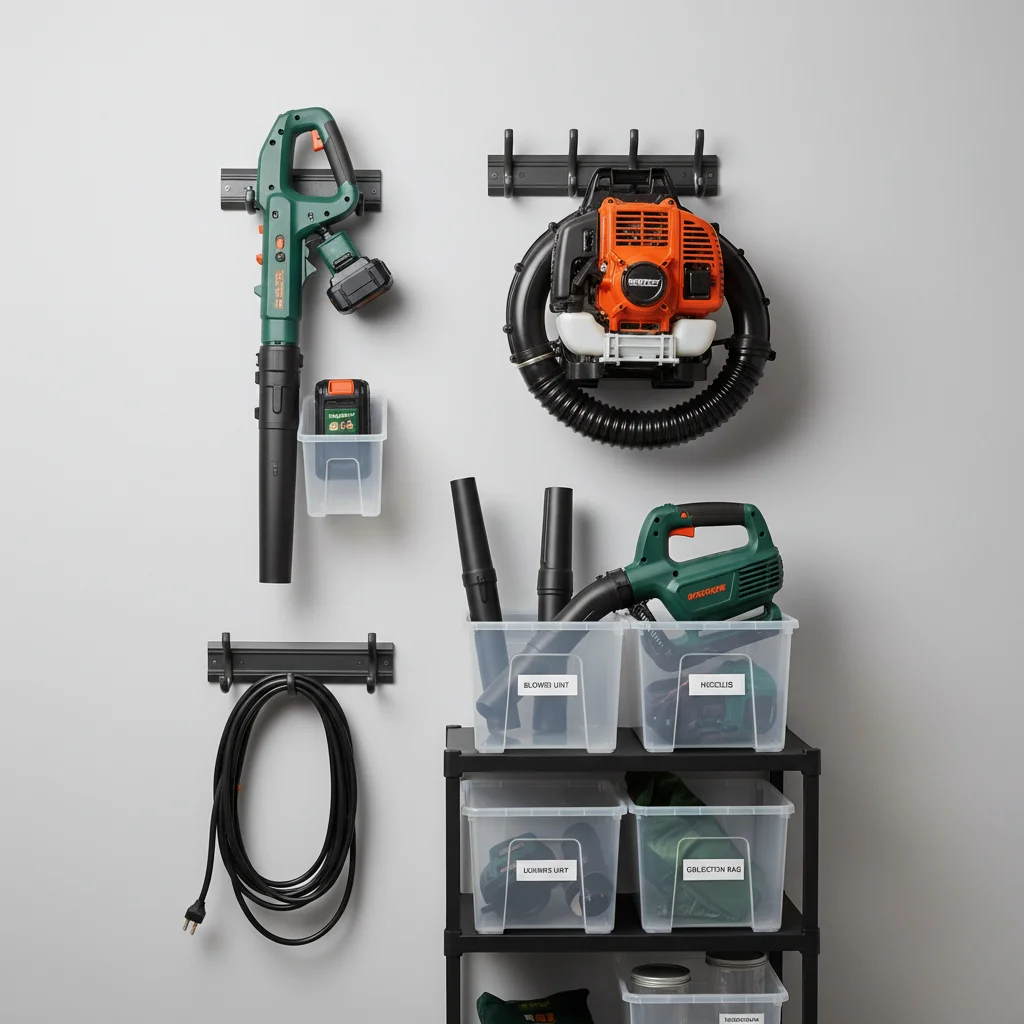
Proper leaf blower storage is crucial for extending the life of your equipment and ensuring it’s ready for action when you need it. By following five essential tips, you can prevent common issues like fuel system clogs, battery degradation, and general wear and tear that can shorten your leaf blower’s lifespan.
1. Clean Your Leaf Blower Thoroughly Before Storage
Before putting your leaf blower away for an extended period, a thorough cleaning is paramount. Remove any leaves, dirt, and debris from the air intake, blower tube, and engine fins. For gas models, clean the spark plug and air filter. A clean machine not only looks better but also prevents accumulated grime from causing blockages or overheating issues during its next use. Use a brush or compressed air for hard-to-reach areas. For complete leaf blower library on this site.
2. Prepare Fuel Systems for Gas Leaf Blowers
For gas-powered leaf blowers, proper fuel management is critical. You have two main options: either run the fuel tank dry or use a fuel stabilizer. Running the tank dry prevents old fuel from gumming up the carburetor, which is a common cause of starting problems. If you choose to use a stabilizer, add it to a full tank of fresh fuel and run the engine for a few minutes to circulate it through the system. Never store a gas leaf blower with untreated fuel for more than a month.
3. Maintain Batteries for Cordless Leaf Blowers
Cordless leaf blowers require specific battery care for long-term storage. Always store lithium-ion batteries with a partial charge, typically around 40-60%. Storing them fully charged or completely depleted can reduce their overall lifespan. Keep batteries in a cool, dry place, away from direct sunlight and extreme temperatures. If you have multiple batteries, consider rotating their use to ensure even wear.
4. Choose the Right Storage Location
The environment where you store your leaf blower significantly impacts its condition. A cool, dry, and sheltered location is ideal. Avoid areas with high humidity, extreme temperature fluctuations, or direct exposure to sunlight. Garages, sheds, or utility closets are generally suitable. Ensure the area is free from pests that might chew on wires or build nests within the machine. Consider using a protective cover to keep dust and moisture at bay.
5. Inspect and Lubricate Moving Parts
Before storing, take a moment to inspect all moving parts. Check for any loose screws, damaged hoses, or worn components. For gas models, apply a small amount of lubricant to the throttle cable and any other exposed metal parts to prevent rust. This proactive inspection can help you identify potential issues before they become major problems, ensuring your leaf blower is in top condition for its next season of use.
Essential Storage Checklist:
|
Our Picks for the Best Leaf Blower in 2026
As an Amazon Associate I earn from qualifying purchases.
|
||
| Num | Product | Action |
|---|---|---|
| 1 | EGO POWER+ Leaf Blower, Cordless Electric 530 CFM, Battery and Charger Not Included - LB5300 |

|
| 2 | BLACK + DECKER Electric Leaf Blower, Hand Held Blowers for Lawn Care, Up to 450 CFM and 140 MPH Power, Axial, Lightweight, Corded (BEBL750) |
|
| 3 | WORX 12 Amp Electric Leaf Blower, Turbine Blower for Lawn Care with 600 CFM & 2 Speed Control, Corded, WG520 |
|
| 4 | Electric Leaf Blower Cordless, 21V Battery Powered Blower with 2 x 4.0Ah Battery and Charge, 715CFM &180MPH and 3 Speed Mode, Brushless Handheld Blowers for Lawn Care, Yard, Leaves, Dust, Snow |
|
| 5 | 20V Handheld Electric Cordless Leaf Blower with 2.0Ah Battery & Fast Charger, Powerful up to 93 MPH, 350 CFM Stepless Speed Control, Powerful for Yard Cleaning |
|
| 6 | 6-Speed Modes Cordless Leaf Blower 21V,200MPH High-Velocity Electric Blower,Lightweight for Dry/Wet Leaves,Lawn Debris,Garage and Driveway Cleaning,Red |
|
| 7 | MZK Cordless Leaf Blower,20V Battery Powered Electric Blower for Lawn Care, Electric Lightweight Leaf Blower for Blowing Leaves, Patio Cleaning and Dust(2 * 2Ah Battery & Charger Included),LF40D13 |
|
| 8 | BLACK+DECKER Electric Leaf Blower, Handheld Blowers for Lawn Care, Lightweight, 180 MPH 180 CFM, 7-Amp, Corded (LB700) |
|
| 9 | WORX Cordless Leaf Blower, Electric Blower with Turbine Fan, Blowers for Lawn Care with 2 Speed Control, Battery & Charger Included, WG547 |
|
| 10 | DEWALT 20V MAX Blower, 100 CFM Airflow, Variable Speed Switch, Includes Trigger Lock, Bare Tool Only (DCE100B) |
|
- Clean all external surfaces and internal components.
- Address fuel (gas models) or battery (cordless models) appropriately.
- Store in a cool, dry, and protected environment.
- Inspect for wear and lubricate moving parts.
- Consider a protective cover for added defense.
By diligently following these five storage tips, you can significantly extend the life of your leaf blower, saving you money on repairs and replacements. A little effort now will ensure your tool is reliable and efficient for many seasons to come.
Get our weekly buyer guide
Practical specs, not advice. Unsubscribe anytime.
