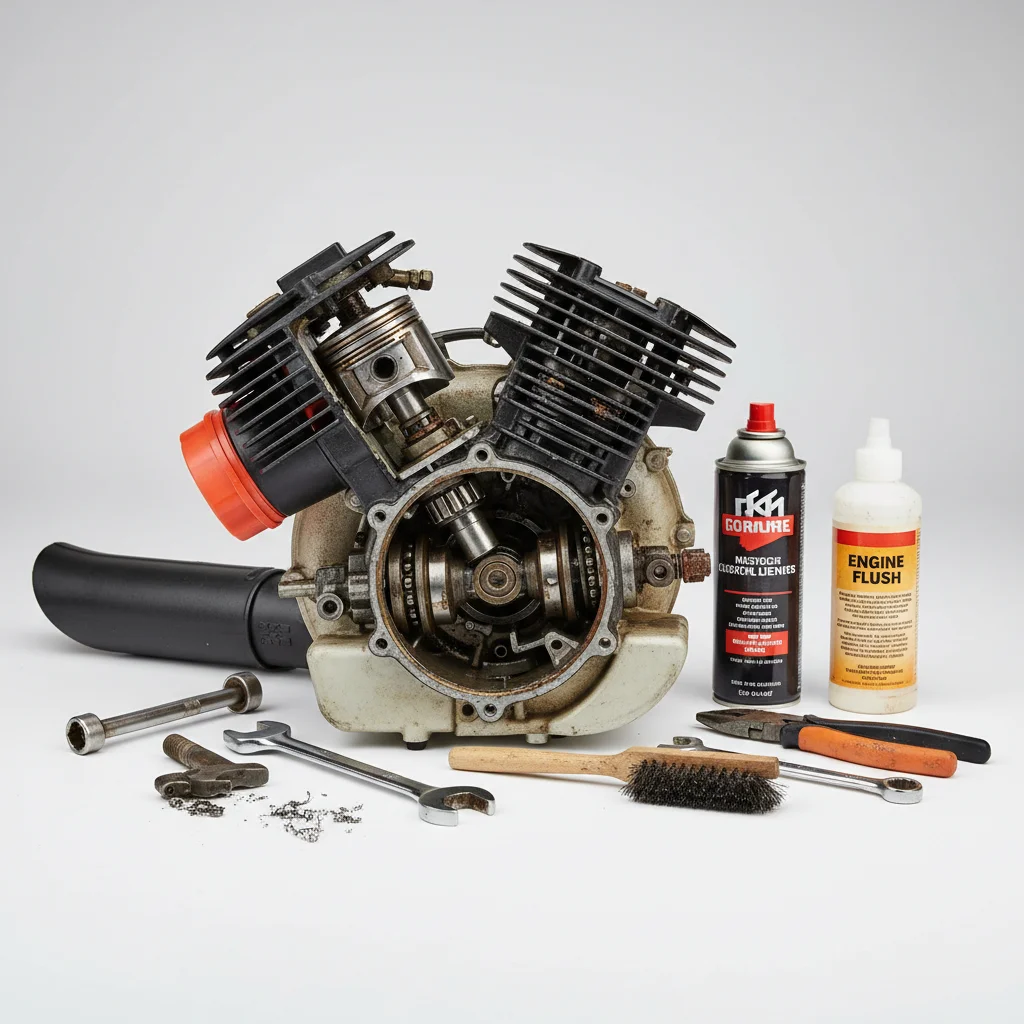
If your leaf blower engine has seized, it’s often due to a lack of lubrication, old fuel, or carbon buildup. Fortunately, there are five common DIY fixes you can attempt before considering professional repair or replacement. These solutions range from simple fuel system checks to more involved engine freeing techniques, and can often get your equipment back in working order.
Understanding Why Your Leaf Blower Engine Seized
An engine seizes when its moving parts, typically the piston and cylinder, become stuck. This can happen for several reasons. One of the most common culprits is improper fuel mixture in 2-stroke engines, leading to insufficient lubrication. Without enough oil, metal-on-metal friction increases, generating excessive heat that can cause components to weld together or expand and bind. Another frequent cause is old or contaminated fuel, which can leave gummy deposits that seize the carburetor or even the piston rings. Lastly, prolonged storage without proper winterization can lead to rust formation on internal components, especially if moisture is present, causing them to lock up. For leaf blower buying guides on this site.
Initial Troubleshooting: Fuel and Spark Plug Checks
Before diving into more complex solutions, always start with the basics. First, drain any old fuel from the tank and carburetor. Replace it with a fresh, properly mixed fuel (for 2-stroke engines) or clean gasoline (for 4-stroke engines). Old fuel can degrade and leave sticky residues that prevent the engine from turning over. Next, remove the spark plug. Inspect it for signs of fouling, carbon buildup, or damage. A dirty or faulty spark plug can prevent ignition, making it seem like the engine is seized when it’s merely not firing. Clean or replace the spark plug as needed. Attempt to pull the starter cord with the spark plug removed; if the engine turns freely now, the issue might be compression related or a simple ignition problem.
Freeing a Stuck Piston with Penetrating Oil
|
Our Picks for the Best Leaf Blower in 2026
As an Amazon Associate I earn from qualifying purchases.
|
||
| Num | Product | Action |
|---|---|---|
| 1 | Electric Leaf Blower Cordless, 21V Battery Powered Blower with 2 x 4.0Ah Battery and Charge, 715CFM &180MPH and 3 Speed Mode, Brushless Handheld Blowers for Lawn Care, Yard, Leaves, Dust, Snow |

|
| 2 | 6-Speed Modes Cordless Leaf Blower 21V,200MPH High-Velocity Electric Blower,Lightweight for Dry/Wet Leaves,Lawn Debris,Garage and Driveway Cleaning,Red |
|
| 3 | BLACK + DECKER Electric Leaf Blower, Hand Held Blowers for Lawn Care, Up to 450 CFM and 140 MPH Power, Axial, Lightweight, Corded (BEBL750) |
|
| 4 | EGO POWER+ Leaf Blower, Cordless Electric 530 CFM, Battery and Charger Not Included - LB5300 |
|
| 5 | WORX 12 Amp Electric Leaf Blower, Turbine Blower for Lawn Care with 600 CFM & 2 Speed Control, Corded, WG520 |
|
| 6 | MZK Cordless Leaf Blower,20V Battery Powered Electric Blower for Lawn Care, Electric Lightweight Leaf Blower for Blowing Leaves, Patio Cleaning and Dust(2 * 2Ah Battery & Charger Included),LF40D13 |
|
| 7 | DEWALT 20V MAX Blower, 100 CFM Airflow, Variable Speed Switch, Includes Trigger Lock, Bare Tool Only (DCE100B) |
|
| 8 | 20V Handheld Electric Cordless Leaf Blower with 2.0Ah Battery & Fast Charger, Powerful up to 93 MPH, 350 CFM Stepless Speed Control, Powerful for Yard Cleaning |
|
| 9 | BLACK+DECKER Electric Leaf Blower, Handheld Blowers for Lawn Care, Lightweight, 180 MPH 180 CFM, 7-Amp, Corded (LB700) |
|
| 10 | WORX Cordless Leaf Blower, Electric Blower with Turbine Fan, Blowers for Lawn Care with 2 Speed Control, Battery & Charger Included, WG547 |
|
If the engine still won’t turn, a seized piston is a strong possibility. A common DIY method involves using penetrating oil. Remove the spark plug and squirt a generous amount of high-quality penetrating oil directly into the cylinder. Let it sit for at least 24 hours, or even longer for stubborn cases. The oil will work to dissolve rust and carbon deposits, and lubricate the piston rings, allowing them to move freely again. After the waiting period, try to gently rock the flywheel back and forth by hand. Avoid excessive force, as this can damage internal components. If it starts to move, continue to work it back and forth, adding more penetrating oil if necessary, until the engine turns freely. Once it’s free, reinsert the spark plug and attempt to start the engine.
Checking for Carburetor Issues and Fuel Line Blockages
Sometimes, a seized engine isn’t truly seized internally but is prevented from turning due to a severely clogged carburetor or fuel line. If the engine feels completely locked, but you suspect the issue isn’t internal, inspect the fuel lines for kinks, cracks, or blockages. Disconnect them and check for fuel flow. A common issue is a clogged fuel filter, which can starve the engine of fuel. If the carburetor is gummed up, it can prevent the throttle from moving, making the engine appear seized. You may need to remove and clean the carburetor thoroughly using a carburetor cleaner. Pay close attention to the jets and passages, ensuring they are clear of debris.
Inspecting the Recoil Starter and Flywheel
Occasionally, the problem isn’t the engine itself but the recoil starter mechanism or the flywheel. A broken recoil spring or a jammed starter pawl can prevent the starter rope from pulling, giving the impression of a seized engine. Remove the starter assembly and inspect it for any damage or debris. Ensure the pawls are engaging and disengaging correctly. Similarly, check the flywheel. If the flywheel key is sheared or the flywheel itself is damaged, it can prevent the engine from turning over. While less common for a true ‘seized’ feeling, these external components are worth checking if the internal engine appears to be free after applying penetrating oil. If the recoil starter is the issue, a replacement kit is often available and relatively easy to install.
Preventative Measures to Avoid Engine Seizure
- Always use fresh fuel and the correct oil-to-gas ratio for 2-stroke engines.
- Add a fuel stabilizer to your fuel if storing the leaf blower for more than 30 days.
- Clean or replace the air filter regularly to prevent dirt from entering the engine.
- Perform annual maintenance, including spark plug inspection and carburetor cleaning.
- Store your leaf blower in a dry, protected area to prevent rust and moisture damage.
Get our weekly buyer guide
Practical specs, not advice. Unsubscribe anytime.
