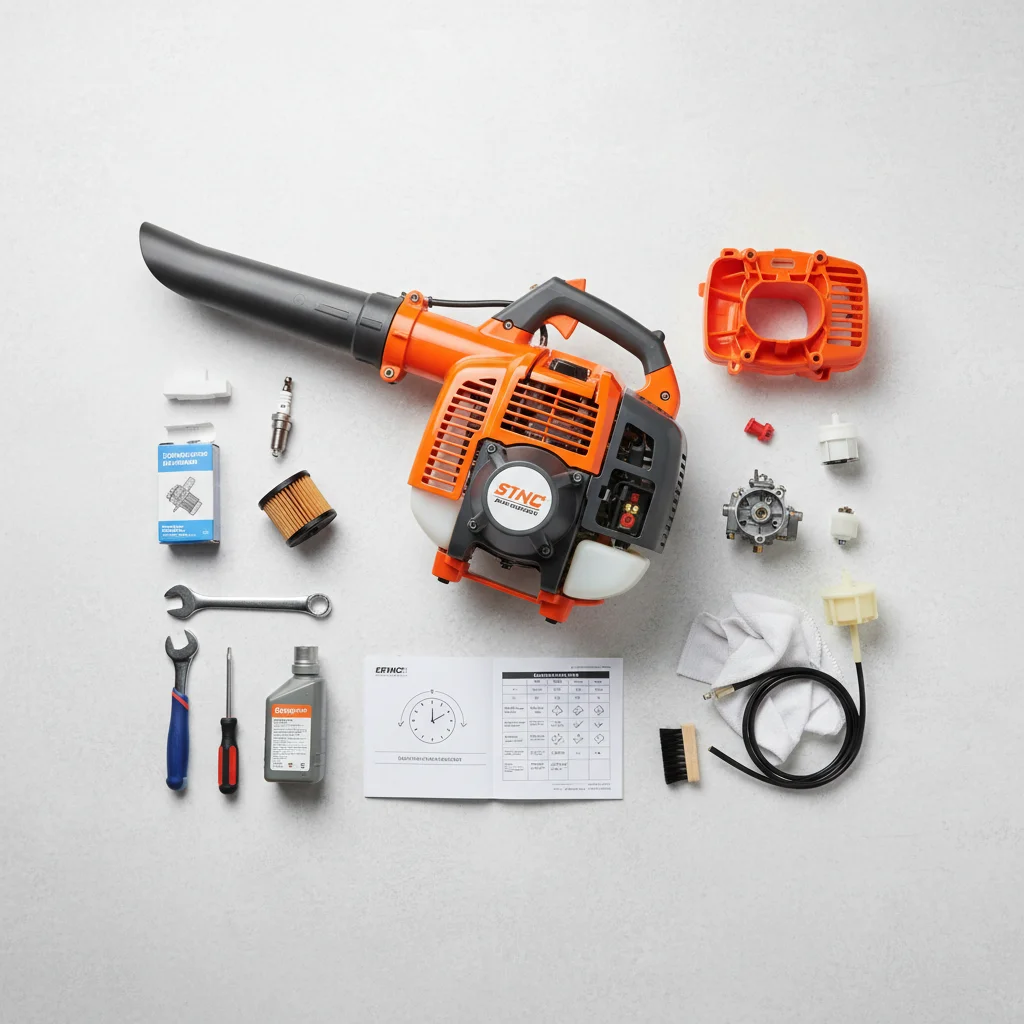
A consistent leaf blower maintenance schedule is crucial for extending the life of your equipment and ensuring optimal performance. Generally, you should perform basic checks before each use, conduct minor maintenance every 25 hours of operation or annually, and undertake more extensive servicing every 100 hours or every two years, whichever comes first.
Pre-Use Checks: Quick Glance for Peak Performance
Before you even start your leaf blower, a few quick checks can prevent headaches. Always inspect the air filter for excessive dirt or debris; a clogged filter can significantly reduce power and efficiency. Check the fuel level and ensure the fuel cap is securely fastened. For gas models, look for any visible fuel leaks around the tank or lines. Finally, give the entire unit a quick visual inspection for loose screws, damaged cords (on electric models), or any other obvious signs of wear and tear.
Routine Maintenance: Every 25 Hours or Annually
Every 25 hours of operation, or at least once a year, it’s time for more thorough maintenance. This includes cleaning or replacing the air filter, which is vital for engine health. For gas models, inspect and clean the spark plug, replacing it if it shows signs of heavy wear or carbon buildup. Check the fuel filter and replace it if it appears dirty. Lubricate any moving parts according to your owner’s manual, such as throttle cables or pivot points. This routine care prevents minor issues from escalating into major repairs.
- Clean or replace the air filter.
- Inspect and clean the spark plug.
- Check and replace the fuel filter if needed.
- Lubricate moving parts.
- Inspect the starter cord for fraying.
Extensive Servicing: Every 100 Hours or Biennially
|
Our Picks for the Best Leaf Blower in 2026
As an Amazon Associate I earn from qualifying purchases.
|
||
| Num | Product | Action |
|---|---|---|
| 1 | WORX 12 Amp Electric Leaf Blower, Turbine Blower for Lawn Care with 600 CFM & 2 Speed Control, Corded, WG520 |

|
| 2 | 20V Handheld Electric Cordless Leaf Blower with 2.0Ah Battery & Fast Charger, Powerful up to 93 MPH, 350 CFM Stepless Speed Control, Powerful for Yard Cleaning |
|
| 3 | BLACK+DECKER Electric Leaf Blower, Handheld Blowers for Lawn Care, Lightweight, 180 MPH 180 CFM, 7-Amp, Corded (LB700) |
|
| 4 | DEWALT 20V MAX Blower, 100 CFM Airflow, Variable Speed Switch, Includes Trigger Lock, Bare Tool Only (DCE100B) |
|
| 5 | 6-Speed Modes Cordless Leaf Blower 21V,200MPH High-Velocity Electric Blower,Lightweight for Dry/Wet Leaves,Lawn Debris,Garage and Driveway Cleaning,Red |
|
| 6 | EGO POWER+ Leaf Blower, Cordless Electric 530 CFM, Battery and Charger Not Included - LB5300 |
|
| 7 | Electric Leaf Blower Cordless, 21V Battery Powered Blower with 2 x 4.0Ah Battery and Charge, 715CFM &180MPH and 3 Speed Mode, Brushless Handheld Blowers for Lawn Care, Yard, Leaves, Dust, Snow |
|
| 8 | WORX Cordless Leaf Blower, Electric Blower with Turbine Fan, Blowers for Lawn Care with 2 Speed Control, Battery & Charger Included, WG547 |
|
| 9 | MZK Cordless Leaf Blower,20V Battery Powered Electric Blower for Lawn Care, Electric Lightweight Leaf Blower for Blowing Leaves, Patio Cleaning and Dust(2 * 2Ah Battery & Charger Included),LF40D13 |
|
| 10 | BLACK + DECKER Electric Leaf Blower, Hand Held Blowers for Lawn Care, Up to 450 CFM and 140 MPH Power, Axial, Lightweight, Corded (BEBL750) |
|
When your leaf blower hits the 100-hour mark, or every two years, it’s time for a deeper dive into its maintenance. This typically involves a carburetor cleaning, especially if you notice performance issues like rough idling or stalling. Inspect the muffler and spark arrestor for carbon buildup and clean them thoroughly. Check all fuel lines for cracks or hardening and replace them as necessary to prevent leaks. For electric models, inspect the motor brushes if they are user-replaceable, and check all electrical connections for corrosion. This comprehensive servicing ensures all components are functioning correctly and helps prevent unexpected breakdowns.
Adhering to a regular maintenance schedule not only prolongs the life of your leaf blower but also ensures it operates safely and efficiently. Neglecting these steps can lead to decreased performance, higher fuel consumption, and costly repairs down the line. Always refer to your specific leaf blower’s owner’s manual for detailed instructions and recommended service intervals, as these can vary slightly between models and manufacturers.
Seasonal Storage Preparation: Protecting Your Investment
If you’re storing your leaf blower for an extended period, especially over winter, proper preparation is key. For gas models, either run the fuel tank dry or use a fuel stabilizer to prevent fuel degradation and carburetor gumming. Remove the spark plug and add a small amount of engine oil into the cylinder, then gently pull the starter cord a few times to distribute the oil, which prevents rust. Clean the exterior of the blower thoroughly and store it in a dry, protected area. For electric models, simply clean the unit and store it in a dry place, ensuring the cord is neatly wrapped and undamaged.
Get our weekly buyer guide
Practical specs, not advice. Unsubscribe anytime.

This guide on leaf blower maintenance is a lifesaver! I always just used my gas blower until it sputtered, but the advice about checking the air filter before each use makes so much sense. My old blower definitely lost power because I neglected that. Now I’m on top of it, and my yard work is way more efficient.
Really helpful breakdown of the maintenance schedule. I appreciate the tip about doing minor maintenance every 25 hours or annually. I usually just wait until spring, but I’m going to try to stick to the hour-based schedule this year since I use mine a lot in the fall. It’s good to know what to look for beyond just fuel.
Good info overall, especially about the extensive servicing every 100 hours. My only minor complaint is that it didn’t really touch on electric models much, mostly focused on gas. I have an electric one and was hoping for a bit more specific guidance on cord checks or battery care beyond just a quick visual. Still, useful for general upkeep.
Fantastic advice! I’ve been having issues with my fuel cap not sealing properly, and the reminder to check for visible fuel leaks was exactly what I needed. It’s those little pre-use checks that make a huge difference in preventing bigger problems down the line. My blower is running much smoother now.