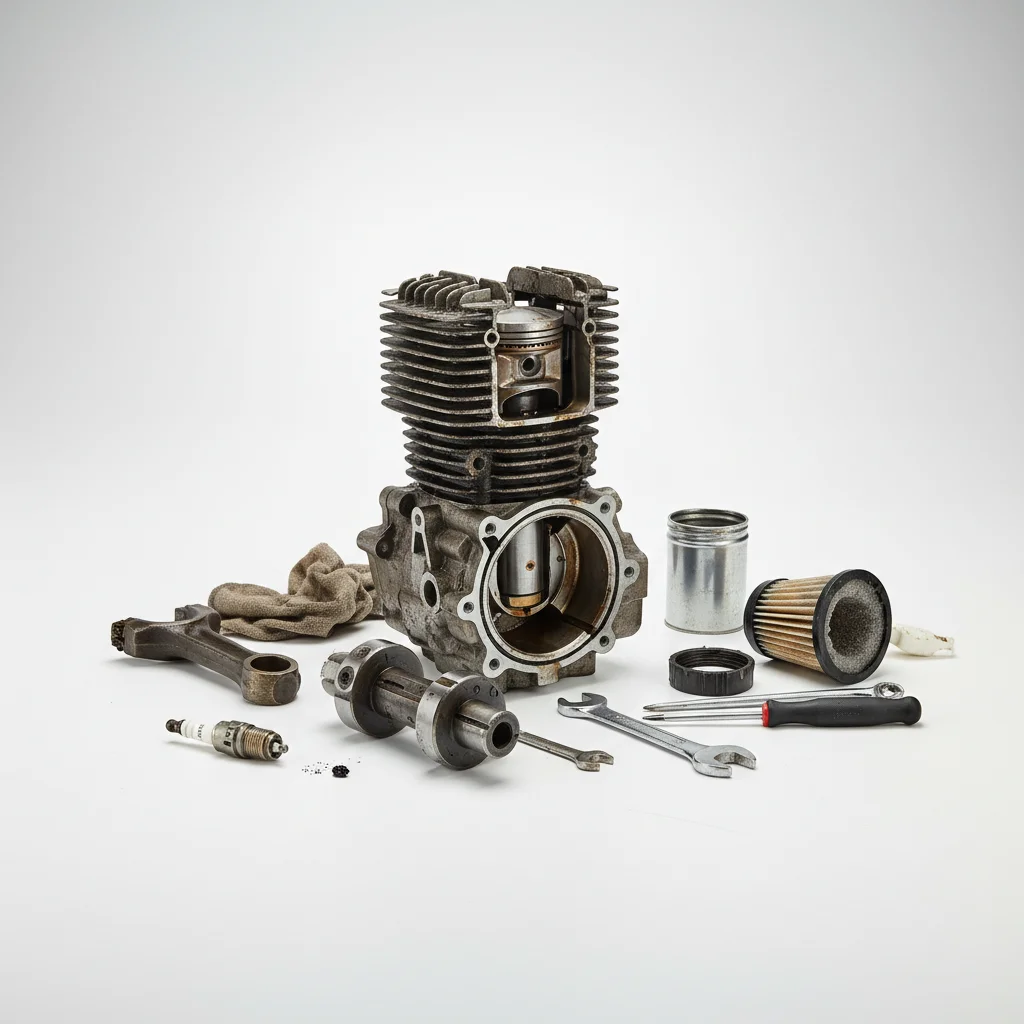
If your leaf blower engine has seized, it’s a frustrating but often diagnosable issue. A seized engine typically means internal components are locked up, preventing the crankshaft from rotating. This can be caused by a lack of lubrication, overheating, or foreign object damage. Fortunately, there are 5 key steps you can take to diagnose and potentially fix the problem, ranging from simple checks to more involved repairs.
Initial Checks: Fuel, Oil, and Pull Cord
Before diving into the engine’s internals, perform some basic checks. First, ensure there’s fresh, correctly mixed fuel in the tank if it’s a 2-stroke, or the proper oil level if it’s a 4-stroke. An incorrect fuel mix or low oil can lead to severe engine damage. Next, try to gently pull the starter cord. If it’s completely locked and won’t budge even slightly, it’s a strong indicator of a seized engine. Sometimes, a tangled pull cord or a faulty recoil starter can mimic a seized engine, so inspect these components for any obvious damage or obstructions. For explore our leaf blower reviews on this site.
Spark Plug Inspection and Cylinder Access
The spark plug can offer valuable clues. Remove the spark plug and inspect its condition. A fouled, oily, or damaged plug can indicate internal engine problems. With the spark plug removed, try to turn the engine over by hand. You can often do this by carefully rotating the flywheel or, if accessible, the crankshaft. If the engine still won’t turn, it confirms a seize. Removing the spark plug also allows you to look into the cylinder with a flashlight, checking for visible damage to the piston or cylinder walls.
Checking for Piston Seizure and Connecting Rod Issues
|
Our Picks for the Best Leaf Blower in 2026
As an Amazon Associate I earn from qualifying purchases.
|
||
| Num | Product | Action |
|---|---|---|
| 1 | MZK Cordless Leaf Blower,20V Battery Powered Electric Blower for Lawn Care, Electric Lightweight Leaf Blower for Blowing Leaves, Patio Cleaning and Dust(2 * 2Ah Battery & Charger Included),LF40D13 |

|
| 2 | WORX 12 Amp Electric Leaf Blower, Turbine Blower for Lawn Care with 600 CFM & 2 Speed Control, Corded, WG520 |
|
| 3 | 6-Speed Modes Cordless Leaf Blower 21V,200MPH High-Velocity Electric Blower,Lightweight for Dry/Wet Leaves,Lawn Debris,Garage and Driveway Cleaning,Red |
|
| 4 | BLACK+DECKER Electric Leaf Blower, Handheld Blowers for Lawn Care, Lightweight, 180 MPH 180 CFM, 7-Amp, Corded (LB700) |
|
| 5 | EGO POWER+ Leaf Blower, Cordless Electric 530 CFM, Battery and Charger Not Included - LB5300 |
|
| 6 | BLACK + DECKER Electric Leaf Blower, Hand Held Blowers for Lawn Care, Up to 450 CFM and 140 MPH Power, Axial, Lightweight, Corded (BEBL750) |
|
| 7 | Electric Leaf Blower Cordless, 21V Battery Powered Blower with 2 x 4.0Ah Battery and Charge, 715CFM &180MPH and 3 Speed Mode, Brushless Handheld Blowers for Lawn Care, Yard, Leaves, Dust, Snow |
|
| 8 | DEWALT 20V MAX Blower, 100 CFM Airflow, Variable Speed Switch, Includes Trigger Lock, Bare Tool Only (DCE100B) |
|
| 9 | 20V Handheld Electric Cordless Leaf Blower with 2.0Ah Battery & Fast Charger, Powerful up to 93 MPH, 350 CFM Stepless Speed Control, Powerful for Yard Cleaning |
|
| 10 | WORX Cordless Leaf Blower, Electric Blower with Turbine Fan, Blowers for Lawn Care with 2 Speed Control, Battery & Charger Included, WG547 |
|
A common cause of a seized engine is piston seizure, often due to overheating or insufficient lubrication. This happens when the piston expands and welds itself to the cylinder wall. If you can access the cylinder head or muffler, removing them might give you a better view of the piston and cylinder. Look for scoring marks, discoloration, or melted areas. If the piston is seized, it will require significant repair or replacement of the piston and cylinder assembly. Another possibility is a broken connecting rod, which can also lock up the engine. This is a more severe internal failure.
- Inspect spark plug for fouling or damage.
- Attempt to turn flywheel by hand with spark plug removed.
- Look for scoring on piston or cylinder walls.
- Check for foreign objects in the combustion chamber.
- Consider a compression test if the engine turns slightly.
Flywheel and Clutch Inspection
Sometimes, the issue isn’t directly with the engine’s core but with attached components. The flywheel, for instance, can become damaged or obstructed, preventing rotation. Remove the fan cover to inspect the flywheel for any debris, bent fins, or signs of impact. If your leaf blower has a clutch, especially on backpack models, a seized clutch can also prevent the engine from turning over. Disconnect the clutch assembly and then try to turn the engine. If it now rotates, the clutch is the culprit, not the engine itself.
Professional Repair or Replacement Considerations
If after these diagnostic steps you’ve confirmed a seized engine due to internal damage like a scored piston, broken connecting rod, or crankshaft issues, the repair can be complex and costly. For many homeowners, the cost of parts and labor for such extensive repairs might approach or even exceed the price of a new leaf blower. Consider the age and overall condition of your leaf blower. If it’s an older model with other signs of wear, investing in a new, more efficient model might be the most economical and practical solution. However, if it’s a relatively new, high-end model, a professional repair might be worthwhile. Always get a quote from a certified small engine mechanic before making a final decision.
Get our weekly buyer guide
Practical specs, not advice. Unsubscribe anytime.
