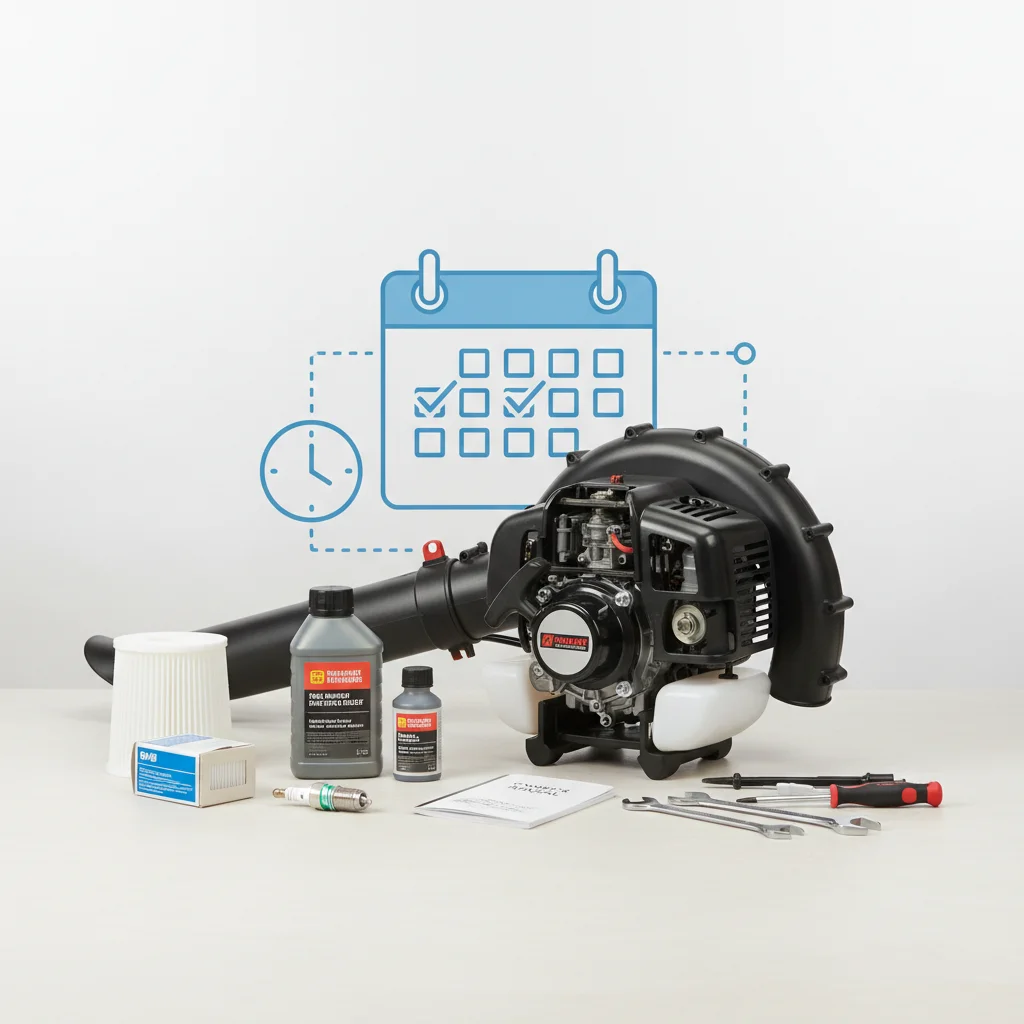
A consistent leaf blower maintenance schedule is crucial for extending the life of your equipment and ensuring optimal performance. Generally, you should service your leaf blower at least once a year, preferably before the heavy leaf-blowing season begins. However, certain components require more frequent attention, such as cleaning air filters every 5-10 hours of use and checking spark plugs every 25 hours.
Why Regular Maintenance Matters for Your Leaf Blower
Regular maintenance prevents common issues like reduced power, difficulty starting, and premature wear. Neglecting maintenance can lead to costly repairs or even the need to replace your leaf blower sooner than expected. By following a routine, you ensure your blower is always ready for the task, saving you time and frustration. For compare top leaf blower on this site.
Key Maintenance Tasks and Their Frequency
Several components of your leaf blower require specific attention at different intervals. Understanding these frequencies is key to a comprehensive maintenance plan. For example, the air filter, which protects the engine from debris, needs frequent cleaning or replacement to maintain proper airflow and prevent engine damage.
- Air Filter Cleaning/Replacement: Every 5-10 hours of use or before each major season.
- Spark Plug Inspection/Replacement: Every 25 hours or annually.
- Fuel Filter Replacement: Annually or every 50 hours.
- Carburetor Adjustment/Cleaning: As needed, typically annually or if performance issues arise.
- Housing and Fan Cleaning: After each use to prevent buildup.
Pre-Season Leaf Blower Checklist
|
Our Picks for the Best Leaf Blower in 2026
As an Amazon Associate I earn from qualifying purchases.
|
||
| Num | Product | Action |
|---|---|---|
| 1 | 20V Handheld Electric Cordless Leaf Blower with 2.0Ah Battery & Fast Charger, Powerful up to 93 MPH, 350 CFM Stepless Speed Control, Powerful for Yard Cleaning |

|
| 2 | MZK Cordless Leaf Blower,20V Battery Powered Electric Blower for Lawn Care, Electric Lightweight Leaf Blower for Blowing Leaves, Patio Cleaning and Dust(2 * 2Ah Battery & Charger Included),LF40D13 |
|
| 3 | DEWALT 20V MAX Blower, 100 CFM Airflow, Variable Speed Switch, Includes Trigger Lock, Bare Tool Only (DCE100B) |
|
| 4 | Electric Leaf Blower Cordless, 21V Battery Powered Blower with 2 x 4.0Ah Battery and Charge, 715CFM &180MPH and 3 Speed Mode, Brushless Handheld Blowers for Lawn Care, Yard, Leaves, Dust, Snow |
|
| 5 | 6-Speed Modes Cordless Leaf Blower 21V,200MPH High-Velocity Electric Blower,Lightweight for Dry/Wet Leaves,Lawn Debris,Garage and Driveway Cleaning,Red |
|
| 6 | BLACK+DECKER Electric Leaf Blower, Handheld Blowers for Lawn Care, Lightweight, 180 MPH 180 CFM, 7-Amp, Corded (LB700) |
|
| 7 | WORX Cordless Leaf Blower, Electric Blower with Turbine Fan, Blowers for Lawn Care with 2 Speed Control, Battery & Charger Included, WG547 |
|
| 8 | BLACK + DECKER Electric Leaf Blower, Hand Held Blowers for Lawn Care, Up to 450 CFM and 140 MPH Power, Axial, Lightweight, Corded (BEBL750) |
|
| 9 | EGO POWER+ Leaf Blower, Cordless Electric 530 CFM, Battery and Charger Not Included - LB5300 |
|
| 10 | WORX 12 Amp Electric Leaf Blower, Turbine Blower for Lawn Care with 600 CFM & 2 Speed Control, Corded, WG520 |
|
Before the peak leaf-blowing season, perform a thorough check of your equipment. This includes inspecting the fuel lines for cracks, ensuring all fasteners are tight, and checking the condition of the blower tube. A pre-season check helps identify potential problems before they become major issues, ensuring a smooth start to your yard work.
Consider using a fuel stabilizer if you store your leaf blower with fuel in the tank for extended periods. This prevents fuel degradation and keeps the carburetor clean.is a highly-rated fuel stabilizer that many users trust for their small engines.
Post-Season Storage and Maintenance
Proper storage at the end of the season is just as important as pre-season preparation. Empty the fuel tank or run the engine dry to prevent fuel-related problems during storage. Clean the entire unit thoroughly, including the fan and housing, to remove any accumulated debris. Lubricate any moving parts as recommended by the manufacturer.
Storing your leaf blower in a dry, protected area will prevent rust and damage from the elements. For those looking for a reliable new model,offers excellent performance and durability, making it a great investment for long-term use.
Troubleshooting Common Maintenance Issues
Even with regular maintenance, issues can arise. If your leaf blower won’t start, check the spark plug, fuel level, and air filter. If it’s losing power, the carburetor might need adjustment or cleaning. Addressing these common problems promptly can prevent further damage and keep your leaf blower running efficiently.
Get our weekly buyer guide
Practical specs, not advice. Unsubscribe anytime.
