Leaves can transform a vibrant autumn landscape into a daunting chore, blanketing your lawn and creating endless piles. But what if you could tackle this seasonal challenge with one powerful, versatile tool, rather than an arsenal of rakes, tarps, and bags? Enter the leaf blower, vacuum, and mulcher combo – a revolutionary solution designed to simplify yard cleanup. This comprehensive guide will explore the best 3-in-1 leaf blower combos available in 2026, helping you navigate the options and select the perfect machine to keep your outdoor spaces pristine and manageable.
Understanding Leaf Blowers with Vacuum and Mulcher Combos
A leaf blower with vacuum and mulcher capabilities is a true multi-tasking hero for any homeowner. Originally, leaf blowers were simple tools for moving debris, while vacuums and mulchers were separate, specialized equipment. Over time, manufacturers innovated, combining these functions into single, efficient units. These 3-in-1 tools allow you to blow leaves into manageable piles, then easily switch modes to vacuum them up, and finally, shred them into fine mulch, significantly reducing their volume. This mulched material can then be used for composting, enriching your garden beds, or simply making disposal much more efficient.
Types of Leaf Blower Combos by Power Source
Choosing the right leaf blower combo often starts with its power source, as each type offers distinct advantages and limitations tailored to different yard sizes and user preferences. For expert leaf blower reviews on this site.
Corded Electric Leaf Blower Combos
Corded electric models are often the go-to for smaller yards and those seeking an eco-friendly option without the hassle of fuel or batteries. They are typically lightweight, easy to start with a simple button, and produce fewer emissions, making them ideal for residential areas where noise and fumes are a concern. Their main drawback is the need for an extension cord, which limits mobility and can be cumbersome in larger or more intricate landscapes. However, their consistent power output ensures they won’t lose strength during operation.
Gas-Powered Leaf Blower Combos
For those with extensive properties, heavy leaf fall, or tough, wet debris, gas-powered leaf blower combos provide unmatched power and mobility. These machines offer robust airflow and speed, making quick work of large areas without being tethered to an outlet or limited by battery life. The trade-offs include higher noise levels, exhaust emissions, and the need for fuel mixing and more frequent maintenance. They are also generally heavier than their electric and battery counterparts, often requiring shoulder straps or a backpack design for comfort during prolonged use.
Battery-Powered Leaf Blower Combos
Battery-powered leaf blower combos strike a balance between the convenience of electric models and the mobility of gas units. Modern battery technology has significantly boosted their power, allowing many cordless models to rival lighter gas units while maintaining quieter operation and zero emissions. They offer cordless freedom, making them perfect for medium to large yards where maneuverability is key. However, battery life can be a limiting factor for extensive jobs, often requiring multiple batteries or strategic charging breaks. Initial costs can also be higher due to the battery and charger investment.
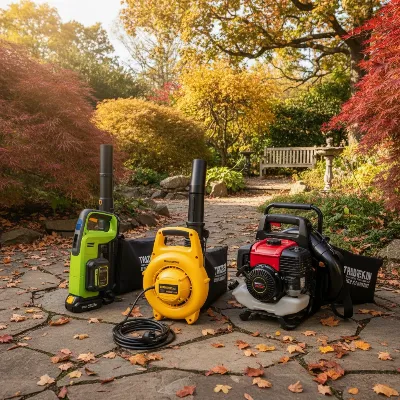 A diverse array of leaf blower, vacuum, and mulcher combos showcasing electric, gas, and battery models in a well-maintained garden setting
Detailed Comparison of Leaf Blower Combo Types
Understanding the nuances of each power source is crucial for making an informed decision. The following table provides a side-by-side comparison to highlight their key differences.
| Feature | Corded Electric Combo | Gas-Powered Combo | Battery-Powered Combo |
|---|---|---|---|
| Power | Consistent, good for light to medium debris | High, excellent for heavy and wet debris | Good to high, improving with technology |
| Mobility | Limited by cord length | Unlimited, highly portable | Cordless, excellent mobility |
| Noise Level | Low to moderate, quieter than gas | High, requires hearing protection | Low to moderate, quieter than gas |
| Maintenance | Low (cleaning, cord inspection) | High (fuel, oil, spark plug, air filter) | Low (cleaning, battery care) |
| Weight | Light to moderate | Moderate to heavy | Light to moderate (can vary with battery size) |
| Cost | Lowest initial cost | Moderate initial cost, ongoing fuel/maintenance | Higher initial cost (batteries/charger), lower running |
| Ideal Use | Small to medium yards, patios, paved areas | Large properties, heavy-duty tasks, wet leaves | Small to large yards, areas without outlets, general use |
Essential Criteria for Choosing the Best Leaf Blower Combo
Selecting the perfect leaf blower, vacuum, and mulcher combo involves more than just picking a power source. Consider these critical factors to ensure your choice aligns with your specific needs.
Assessing Your Yard and Debris Type
The size of your property is paramount. For small patios or driveways, a lightweight corded electric or compact battery-powered unit will suffice. Medium-sized yards benefit from the mobility of battery models, offering enough power and runtime for most tasks. Large properties, however, typically demand the sustained power and freedom of a gas-powered or a high-voltage battery backpack unit. Beyond size, consider the type of debris you primarily handle. Dry, light leaves are easily managed by most units, but wet, matted leaves, small twigs, or pinecones require higher CFM and MPH, often found in more powerful gas or professional-grade battery models.
Performance Metrics (CFM and MPH)
When evaluating power, focus on two key metrics: CFM (Cubic Feet per Minute) and MPH (Miles per Hour). CFM indicates the volume of air the blower moves, crucial for clearing large piles of leaves quickly. Higher CFM means more leaves moved in one pass. MPH, on the other hand, measures the speed of the air, which determines its ability to dislodge stubborn, wet, or heavy debris. A higher MPH provides more “pushing” power. A good combo unit will offer a balanced blend of high CFM for efficient clearing and sufficient MPH for tackling tougher jobs.
Mulching Ratio and Impeller Type
The mulching feature is what truly differentiates a combo unit. The mulching ratio tells you how many bags of leaves are reduced to one bag of mulch (e.g., an 18:1 ratio means 18 bags of leaves become 1 bag of mulch). A higher ratio means less frequent bag emptying and more efficient composting. The impeller type is also crucial; metal impellers are significantly more durable and effective at shredding tough debris like twigs than plastic ones, which are better suited for dry leaves.
Weight, Ergonomics, and Collection Bag
Comfort is key, especially during longer cleanup sessions. Handheld models are lighter but can cause fatigue, while backpack blowers distribute weight more evenly, making them suitable for larger tasks. Look for ergonomic designs, cushioned handles, and comfortable shoulder straps to reduce strain. The collection bag’s capacity and ease of emptying are also vital. Larger bags mean fewer stops, and designs that unzip easily or have broad openings simplify disposal.
Noise Level
Noise pollution is a significant concern, particularly in residential areas. Gas blowers are notoriously loud, often requiring hearing protection and being restricted by local noise ordinances. Electric and battery models are considerably quieter, making them more neighbor-friendly. Always check the decibel (dB) rating if noise is a priority.
Additional Features and Brand Reputation
Modern leaf blower combos come with various features that enhance usability. Variable speed controls allow you to adjust power for different tasks (e.g., low speed for delicate flowerbeds, high for clearing open lawns). Easy conversion mechanisms between blowing, vacuuming, and mulching modes save time and effort. Finally, choose reputable brands known for quality, durability, and reliable customer service. A good warranty can also provide peace of mind.
> “The true value of a 3-in-1 leaf blower lies not just in its power, but in its ability to adapt to diverse yard challenges, transforming a laborious task into an efficient, almost enjoyable, experience.” – Admin, reviewtutam.com
Top Leaf Blower, Vacuum, and Mulcher Combos for 2026
Based on market analysis, expert reviews, and user feedback, here are some of the top-rated leaf blower, vacuum, and mulcher combos that stand out in 2026 for their performance, features, and value.
1. Worx TRIVAC 3-in-1 Electric Leaf Blower/Mulcher/Vacuum
- Overview: A highly popular corded electric model known for its seamless transition between functions with a simple switch, eliminating the need to change tubes.
- Key Specs: Often features a powerful 12-Amp motor, high air speeds (e.g., up to 210-260 MPH), a high mulching ratio (e.g., 18:1), and a robust metal impeller.
- Pros: Excellent value, lightweight, powerful for an electric model, strong mulching capabilities, easy to switch modes, great for small to medium yards.
- Cons: Limited by cord length.
- Ideal Use: Homeowners with small to medium-sized yards, patios, and driveways seeking an affordable, versatile tool.
2. Toro Ultra Electric Blower Vacuum Mulcher
- Overview: Another strong contender in the corded electric category, praised for its robust build and powerful performance in vacuuming and mulching.
- Key Specs: Often boasts high air speeds (up to 260 MPH), strong CFM (e.g., 340 CFM in blow, 405 CFM in vacuum), and a durable metal impeller for superior shredding.
- Pros: Powerful suction, excellent mulching ratio, ergonomic design, often includes an oscillating nozzle for wider coverage, relatively quiet.
- Cons: Blowing performance can be less powerful than vacuum, still corded.
- Ideal Use: Those prioritizing vacuum and mulching efficiency for hard surfaces and general yard cleanup in medium-sized areas.
3. Stihl SH 56 C-E Gas Handheld Blower/Vacuum/Mulcher
- Overview: A powerful gas-powered option from a reputable brand, ideal for heavy-duty tasks where cordless power is essential.
- Key Specs: Features a 27.2 cc engine, high air speed (e.g., 159 MPH), strong CFM, and Stihl’s Easy2Start system.
- Pros: Exceptional performance, robust build quality, easy starting, great mobility, handles wet and heavy debris effectively.
- Cons: Higher noise level, requires fuel mixture and more maintenance, heavier than electric/battery units.
- Ideal Use: Large properties, professional use, or homeowners who need maximum power and mobility for demanding leaf removal.
4. Ryobi 40V Cordless Leaf Blower/Mulcher/Vacuum
- Overview: A battery-powered option that offers significant power and cordless freedom, making it a favorite for many.
- Key Specs: Often features a 40V battery system, powerful CFM (e.g., 600 CFM in vacuum mode), and an impressive mulching ratio (e.g., 20:1).
- Pros: Cordless convenience, strong suction and mulching, high reduction ratio, comfortable harness for backpack models, relatively quiet.
- Cons: Battery runtime can be limited for very large jobs, higher initial cost.
- Ideal Use: Homeowners with medium to large yards who desire cordless operation and powerful mulching without the noise and emissions of gas.
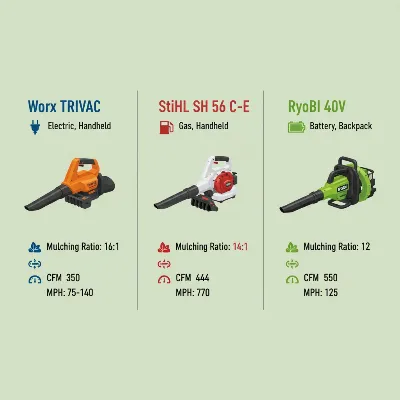 An illustrative comparison of top-rated leaf blower combos, highlighting their features and benefits in a clean graphic style
Safe Operation and Maintenance Tips for Your Combo Unit
Proper care and safe operation are crucial to extend the lifespan of your leaf blower, vacuum, and mulcher combo and ensure your safety.
Safe Operation Guidelines
Always prioritize safety. Wear appropriate personal protective equipment (PPE), including eye protection, hearing protection (especially with gas models), and sturdy gloves. Avoid operating the machine near children or pets. Work only with dry leaves and debris to prevent clogging and optimize mulching performance. Never use the vacuum function to pick up rocks, large sticks, or other hard objects that could damage the impeller. Be mindful of your surroundings, ensuring no loose clothing or jewelry can get caught in moving parts.
Routine Cleaning and Maintenance
After each use, wipe down the exterior of your unit to remove dust, dirt, and sap. For gas models, clean the air filter regularly (tap clean or use compressed air) and inspect the spark plug. Battery-powered units require checking battery contacts and storing batteries in a cool, dry place. For all combo units, it’s vital to clean the impeller housing regularly, removing any accumulated debris that could hinder performance or cause imbalance. Empty and clean the collection bag thoroughly to prevent mold or unpleasant odors, especially if wet leaves were vacuumed. Regularly inspect the cord on electric models for any signs of wear or damage.
Seasonal Checks and Storage
Before and after the peak leaf-clearing season, perform a more thorough inspection. Check for any loose screws, damaged tubes, or worn components. For gas models, drain the fuel and run the engine dry before long-term storage, or use a fuel stabilizer to prevent carburetor issues. Store all units in a dry, well-ventilated area, protected from extreme temperatures and moisture. Following these simple steps will ensure your combo unit is ready for action whenever duty calls.
Environmentally Conscious Leaf Cleanup
Beyond the efficiency of a 3-in-1 combo, there are important environmental considerations when tackling yard waste. Using your leaf blower responsibly can help protect your local ecosystem.
Reducing Noise and Emissions
If possible, opt for battery-powered or corded electric models, as they produce significantly less noise and zero direct emissions compared to gas-powered units. For gas models, ensure they are well-maintained to run efficiently, minimizing emissions. When operating any blower, be considerate of neighbors by adhering to local noise ordinances and avoiding early morning or late-night use. Using the mulcher function also reduces the volume of debris that needs to be transported, cutting down on carbon emissions from waste disposal.
Composting Mulched Leaves
One of the greatest environmental benefits of a mulcher combo is the ability to create nutrient-rich compost. Instead of sending leaves to a landfill, where they can release methane gas, mulched leaves can be used as natural fertilizer for your garden beds, improving soil health, retaining moisture, and suppressing weeds. This closed-loop system not only reduces waste but also provides a sustainable solution for yard care.
Choosing Eco-Friendly Models
As technology advances, many manufacturers are focusing on more sustainable designs and materials. When upgrading, consider models with energy-efficient motors, long-lasting batteries, and durable components that contribute to a longer product lifespan. By making conscious choices, you can achieve a tidy yard while minimizing your ecological footprint.
Conclusion
Choosing the best leaf blower, vacuum, and mulcher combo for your home in 2026 is an investment in efficiency and convenience. By carefully considering your yard size, debris type, power source preferences, and essential features like CFM, MPH, and mulching ratio, you can find a versatile tool that transforms your yard cleanup routine. These 3-in-1 machines are not just about clearing leaves; they’re about reclaiming your weekends, nurturing your garden, and enjoying a pristine outdoor space with minimal effort.
What aspect of yard cleanup do you find most challenging, and how do you envision a 3-in-1 leaf blower combo simplifying it for you?
Frequently Asked Questions
What is the primary benefit of a 3-in-1 leaf blower combo?
The main benefit is its versatility, allowing you to blow leaves into piles, vacuum them up, and then mulch them all with a single tool. This saves time, reduces effort, and significantly decreases the volume of yard waste.
How do CFM and MPH affect leaf blower performance?
CFM (Cubic Feet per Minute) measures the volume of air, which is crucial for moving large piles of leaves quickly. MPH (Miles per Hour) indicates the speed of the air, essential for dislodging heavy, wet, or stubborn debris. Both are important for effective performance.
Is a metal impeller better than a plastic one for mulching?
Yes, a metal impeller is generally superior for mulching. It is more durable and effective at shredding tougher debris like small twigs and wet leaves, providing a finer mulch and preventing clogs more efficiently than a plastic impeller.
How often should I clean my leaf blower vacuum mulcher?
It’s recommended to clean the exterior and empty the collection bag after each use. Regular checks of the air filter, impeller housing, and other components should be done periodically, with more thorough maintenance checks seasonally.
Can I use a battery-powered combo for a large yard?
Modern battery-powered leaf blower combos are becoming increasingly powerful and can handle larger yards. However, for very extensive properties, you might need multiple charged batteries or consider a high-voltage backpack model to ensure sufficient runtime.
What is a good mulching ratio to look for?
A good mulching ratio is typically 10:1 or higher. Ratios like 16:1, 18:1, or 20:1 are excellent, as they significantly reduce the volume of leaves, meaning fewer trips to empty the collection bag and more compact material for composting.
Are leaf blower combos noisy?
The noise level varies significantly by power source. Gas-powered models are the loudest and often require hearing protection. Corded electric and battery-powered models are considerably quieter, making them more suitable for residential areas.
Get our weekly buyer guide
Practical specs, not advice. Unsubscribe anytime.
