The demanding world of commercial landscaping requires equipment that is not just powerful, but also reliable and comfortable for extended daily use. A high-performing commercial backpack leaf blower can significantly boost productivity, transforming tiresome cleanup tasks into efficient operations. This comprehensive guide delves into the essence of commercial backpack leaf blowers, exploring their types, crucial buying factors, and showcasing the top 5 models setting the standard in 2026. Whether you’re managing sprawling estates or intricate urban landscapes, understanding these machines is key to making an informed investment that truly pays off.
What is a Commercial Backpack Leaf Blower?
A commercial backpack leaf blower is a heavy-duty outdoor power tool specifically designed for professional landscape maintenance. Unlike their handheld or residential counterparts, these machines are engineered for superior power, durability, and comfort, enabling operators to tackle large areas and substantial debris for extended periods. The fundamental purpose of these blowers is to efficiently move leaves, grass clippings, dirt, and other outdoor debris, making cleanup faster and less strenuous.
The evolution of leaf blowers has seen them transform from simple handheld devices to robust, ergonomically designed backpack units. This shift was driven by the need for greater power output and improved operator comfort, as landscapers began facing larger properties and more stringent efficiency demands. Modern commercial backpack blowers feature powerful engines or motors, advanced fan designs, and sophisticated harness systems to distribute weight evenly, significantly reducing fatigue during long shifts. These are essential tools for any professional aiming for maximum productivity and sustained performance.
Types of Commercial Backpack Leaf Blowers by Power Source
Commercial backpack leaf blowers primarily come in two power source variations: gas-powered and battery-powered. Each type offers distinct advantages and disadvantages, making them suitable for different commercial applications.
Gas-Powered Commercial Backpack Leaf Blowers
|
Our Picks for the Best Leaf Blower in 2026
As an Amazon Associate I earn from qualifying purchases.
|
||
| Num | Product | Action |
|---|---|---|
| 1 | Electric Leaf Blower Cordless, 21V Battery Powered Blower with 2 x 4.0Ah Battery and Charge, 715CFM &180MPH and 3 Speed Mode, Brushless Handheld Blowers for Lawn Care, Yard, Leaves, Dust, Snow |

|
| 2 | MZK Cordless Leaf Blower,20V Battery Powered Electric Blower for Lawn Care, Electric Lightweight Leaf Blower for Blowing Leaves, Patio Cleaning and Dust(2 * 2Ah Battery & Charger Included),LF40D13 |
|
| 3 | WORX 12 Amp Electric Leaf Blower, Turbine Blower for Lawn Care with 600 CFM & 2 Speed Control, Corded, WG520 |
|
| 4 | BLACK + DECKER Electric Leaf Blower, Hand Held Blowers for Lawn Care, Up to 450 CFM and 140 MPH Power, Axial, Lightweight, Corded (BEBL750) |
|
| 5 | EGO POWER+ Leaf Blower, Cordless Electric 530 CFM, Battery and Charger Not Included - LB5300 |
|
| 6 | BLACK+DECKER Electric Leaf Blower, Handheld Blowers for Lawn Care, Lightweight, 180 MPH 180 CFM, 7-Amp, Corded (LB700) |
|
| 7 | DEWALT 20V MAX Blower, 100 CFM Airflow, Variable Speed Switch, Includes Trigger Lock, Bare Tool Only (DCE100B) |
|
| 8 | 20V Handheld Electric Cordless Leaf Blower with 2.0Ah Battery & Fast Charger, Powerful up to 93 MPH, 350 CFM Stepless Speed Control, Powerful for Yard Cleaning |
|
| 9 | WORX Cordless Leaf Blower, Electric Blower with Turbine Fan, Blowers for Lawn Care with 2 Speed Control, Battery & Charger Included, WG547 |
|
| 10 | 6-Speed Modes Cordless Leaf Blower 21V,200MPH High-Velocity Electric Blower,Lightweight for Dry/Wet Leaves,Lawn Debris,Garage and Driveway Cleaning,Red |
|
Gas-powered backpack leaf blowers have long been the industry standard for their unmatched power and extended runtime. These machines typically feature two-stroke or four-stroke engines, offering immense force for clearing stubborn debris and vast areas.
The primary advantages of gas-powered blowers include their high blowing force, measured in CFM (Cubic Feet per Minute) and MPH (Miles Per Hour), and Newtons, which directly translates to superior debris-moving capability. They offer extensive runtime on a single tank of fuel, providing unrestricted mobility without the need for recharging. This makes them ideal for large properties, remote locations without easy access to power, and heavy-duty tasks involving wet leaves or compacted debris.
However, gas-powered models come with disadvantages. They are generally louder, often exceeding local noise ordinances, and produce exhaust emissions, impacting both air quality and operator health. They also tend to be heavier than battery-powered alternatives and require more intensive maintenance, including fuel mixing (for two-stroke engines), filter cleaning, and regular engine tune-ups.
Battery-Powered Commercial Backpack Leaf Blowers
Battery-powered commercial backpack leaf blowers represent the cutting edge of outdoor power equipment, gaining significant traction due to advancements in battery technology. These models utilize powerful electric motors and high-capacity lithium-ion batteries.
The main benefits of battery-powered blowers are their quiet operation, zero emissions, and reduced maintenance requirements. They are often lighter as bare tools, contributing to less operator fatigue. For commercial operations in noise-sensitive zones, such as residential areas, schools, or hospitals, battery blowers are increasingly becoming a necessity due to local regulations.
Despite their growing popularity, battery-powered blowers have certain limitations. Their runtime is restricted by battery capacity, often necessitating multiple batteries for extended workdays, which adds to the overall weight and initial cost. While their power has significantly improved, some heavy-duty tasks may still demand the raw force of a top-tier gas model. The initial investment can also be higher, as batteries and chargers are typically sold separately and contribute substantially to the total price.
Key Factors When Choosing a Commercial Backpack Leaf Blower
Selecting the right commercial backpack leaf blower is a strategic decision that impacts productivity, operational costs, and worker comfort. Several critical factors must be carefully considered to ensure you invest in a machine that precisely meets your professional needs.
Assessing Your Commercial Needs
Before evaluating specific models, it is crucial to clearly define your operational requirements. Consider the typical area size you will be clearing; expansive properties demand higher power and longer runtimes. The type of debris you regularly encounter also matters: light, dry leaves require less power than heavy, wet leaf piles, gravel, or matted grass clippings. Finally, assess your frequency and duration of use. Will the blower be used daily for several hours, or intermittently for specific seasonal tasks? These considerations will guide your choice of power source and performance specifications.
Power Metrics: CFM, MPH, and Newtons
Understanding the key power metrics is fundamental to choosing an effective leaf blower.
- CFM (Cubic Feet Per Minute) measures the volume of air the blower moves. A higher CFM is essential for clearing large quantities of leaves and debris, as it indicates the sheer amount of material the blower can displace at once.
- MPH (Miles Per Hour) indicates the speed at which air exits the nozzle. High MPH is critical for dislodging heavy, wet, or matted leaves and other stubborn debris. It provides the “punch” needed to break through resistance.
- Newtons (N), or blowing force, provides a direct and comprehensive measure of a blower’s overall power, combining both air volume and speed into a single, quantifiable metric. For professional users, this is often the most important specification, with commercial-grade blowers typically exceeding 25 Newtons, and top-tier models reaching well over 40 Newtons.
For commercial applications, aim for a blower with high values in all three metrics. A machine with 900 CFM or higher, combined with impressive MPH and Newton force, is ideal for large properties and heavy-duty tasks.
Weight, Comfort, and Ergonomics
Given that commercial operators often wear these machines for hours, the weight, comfort, and ergonomic design are paramount. A heavy, uncomfortable blower can lead to significant operator fatigue, reduced productivity, and potential injuries. Look for models featuring:
- Padded Harness Systems: Thick, breathable padding on shoulder straps and hip belts helps distribute weight evenly and comfortably across the operator’s back and hips.
- Anti-Vibration Systems: Advanced dampening systems reduce engine or motor vibrations, minimizing discomfort and long-term strain on the operator’s body.
- Adjustable Straps and Backrests: Customizable fits ensure proper weight distribution for various body types.
- Throttle Controls: Whether you prefer a hip-mounted or tube-mounted throttle, ensure it’s easily accessible and comfortable for prolonged use.
> “In commercial landscaping, comfort isn’t a luxury; it’s a necessity for sustained productivity and operator well-being.” – Admin, reviewtutam.com
Noise Levels and Environmental Impact
Noise pollution is a growing concern, and many municipalities now have strict ordinances regarding acceptable noise levels for outdoor power equipment. Commercial operators must consider the decibel (dB) rating of their blowers. Battery-powered models typically operate at significantly lower noise levels compared to gas models, making them a preferred choice for residential and urban environments.
The environmental impact, particularly concerning exhaust emissions from gas-powered blowers, is another vital consideration. Zero-emission battery models offer a cleaner alternative, contributing to better air quality for operators and the community.
Durability and Maintenance
Commercial equipment endures rigorous daily use, so durability is non-negotiable. Look for blowers constructed with robust materials, high-quality components, and a strong warranty.
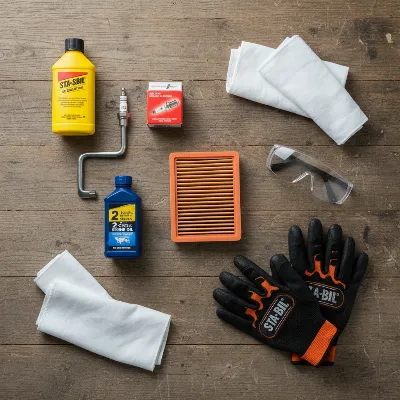
- Gas Blower Maintenance: Regular maintenance for gas models includes checking and changing the air filter, spark plug, and fuel filter, as well as ensuring the correct fuel-oil mixture (for 2-stroke engines).
- Battery Blower Maintenance: Battery models require less routine engine maintenance, but proper battery care—including optimal charging and storage practices—is crucial for maximizing battery lifespan and performance.
Comparison Table: Gas vs. Battery Commercial Backpack Leaf Blowers
Here’s a detailed comparison to help you weigh the pros and cons of gas versus battery-powered commercial backpack leaf blowers:
| Feature | Gas-Powered | Battery-Powered |
|---|---|---|
| Power Output | Very High (e.g., 40+ Newtons, 1000+ CFM) | High (e.g., 25-50 Newtons, 700-800+ CFM) |
| Runtime | Long (several hours per full tank) | Limited (20-60 minutes per charge, depending on speed) |
| Noise Level | High (typically 95-110 dB at operator’s ear) | Lower (typically 60-75 dB at operator’s ear) |
| Emissions | Yes (exhaust fumes) | Zero |
| Weight | Higher (22-30+ lbs dry) | Lower (bare tool), comparable or higher with multiple batteries |
| Maintenance | Higher (fuel mix, filter, spark plug, engine tune-ups) | Lower (battery care, motor checks) |
| Initial Cost | Generally lower (for the unit itself) | Higher (due to cost of batteries & charger) |
| Operating Cost | Fuel, oil, maintenance parts | Electricity, eventual battery replacement |
| Mobility | Unlimited by power source | Limited by battery capacity and charging infrastructure |
| Best For | Large-scale jobs, heavy debris, remote locations | Noise-sensitive areas, routine maintenance, eco-conscious operations |
Top 5 Best Commercial Backpack Leaf Blowers in 2026
Choosing the best commercial backpack leaf blower involves balancing raw power with comfort, reliability, and specific operational needs. Based on performance, user feedback, and industry trends, here are our top 5 picks for 2026.
1. RedMax EBZ 9000
 RedMax EBZ 9000 commercial backpack leaf blower in action, clearing a large area with powerful airflow, seen from behind a landscaper
The RedMax EBZ 9000 stands out as a formidable force in the commercial leaf blower market, consistently ranked for its maximum productivity and sheer blowing power. Designed for professional crews tackling massive properties and extensive fall cleanups, this model prioritizes airflow and runtime, making it a favorite for those whose business hinges on moving debris rapidly. Its robust engine and high performance metrics ensure that even the most challenging leaf jobs are handled with efficiency.
Key Specs:
- Engine: 78.6 cc
- Air Volume: 1,245 CFM
- Air Speed: 216 mph
- Dry Weight: 26 lbs
- Fuel Capacity: 91.3 oz
Pros:
- Unmatched Airflow: Delivers the highest air volume on the market, ideal for moving huge quantities of debris quickly.
- Long Runtime: Equipped with a large fuel tank for extended operation, reducing interruptions for refueling.
- Exceptional Productivity: Built for serious commercial workloads, maximizing efficiency on large-scale cleanups.
Cons:
- Can be on the heavier side, which might be a factor for some operators during prolonged use.
- Premium pricing reflects its top-tier performance.
2. Stihl BR 800 C-E Magnum
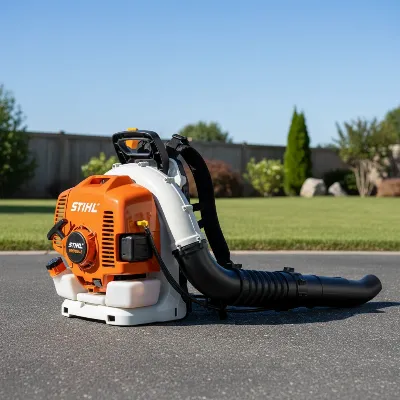 Stihl BR 800 C-E Magnum professional backpack leaf blower with its distinctive side-start feature, ready for operation
The Stihl BR 800 C-E Magnum is an industry benchmark, celebrated for its superb balance of power, comfort, and legendary Stihl reliability. It’s a highly recognized and popular choice among lawn care professionals, often seen on trucks everywhere due to its well-engineered design. This blower not only delivers impressive force but also incorporates features that significantly enhance operator comfort and ease of use.
Key Specs:
- Engine: 79.9 cc
- Air Volume: 912 CFM
- Air Speed: 239 mph
- Blowing Force: 41 Newtons
- Dry Weight: 25.8 lbs
- Noise Rating: 78 decibels
Pros:
- Excellent Blowing Force: Provides substantial power for clearing tough debris.
- Easy2Start System: Features a side-mounted pull cord requiring less effort, allowing for starting while worn.
- Advanced Anti-Vibration: Significantly reduces vibration, minimizing operator fatigue during long jobs.
- Comfortable Harness: Well-designed harness system ensures comfort for all-day use.
Cons:
- It is one of the more expensive options on the market.
3. Echo PB-9010T
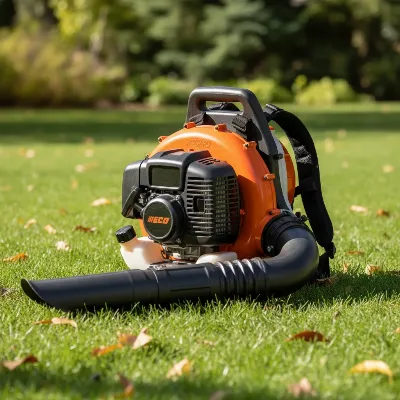 Echo PB-9010T commercial backpack leaf blower with its powerful engine and large air volume, positioned on a grassy field
The Echo PB-9010T is a strong, simple, and dependable commercial backpack leaf blower that earns high marks for its raw power and unwavering reliability. Echo is known for producing robust equipment, and the PB-9010T is a testament to this, offering an impressive blend of airflow and speed that can handle demanding professional tasks with ease. While it might be described as less refined in some aspects compared to its top competitors, its sheer performance makes it a solid choice.
Key Specs:
- Engine: 79.9 cc
- Air Volume: 1,110 CFM
- Air Speed: 220 mph
- Blowing Force: 48 Newtons
- Dry Weight: 26.7 lbs
- Fuel Capacity: 83.8 oz
Pros:
- Exceptional Power: Delivers a high blowing force and significant air volume for fast cleanups.
- Reliable Performance: Known for its dependable operation in commercial settings.
- Solid Construction: Built to withstand the rigors of daily professional use.
Cons:
- Slightly heavier than some rivals, which could affect comfort over very long workdays.
- Ergonomics may be considered less refined compared to models focused heavily on comfort features.
4. Husqvarna 360BT
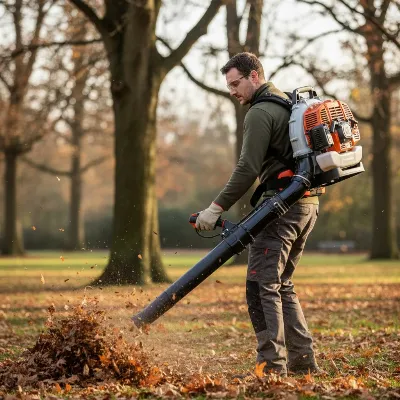 Husqvarna 360BT gas-powered backpack leaf blower with its ergonomic harness and powerful nozzle, against a blurred park background
The Husqvarna 360BT offers commercial-grade power at a reasonable price, making it an excellent value proposition for professionals. This gas-powered blower is designed to provide ample force for clearing leaves off larger properties, combining a robust engine with user-centric comfort features. Husqvarna’s commitment to performance and ergonomics shines through in this model, offering a powerful tool that remains manageable for extended use.
Key Specs:
- Engine: 65.6 cc (2-cycle)
- Air Volume: 890 CFM
- Air Speed: 232 mph
- Dry Weight: 23 lbs
Pros:
- Strong Power-to-Weight Ratio: Delivers significant power without excessive weight.
- Comfortable Design: Features ample padding on the backrest, shoulder straps, and hip belt for a manageable carry.
- Competitive Price: Offers commercial performance at a relatively accessible price point.
Cons:
- CFM might be slightly lower than the absolute highest-tier models, though still very capable for most commercial tasks.
5. Greenworks Commercial BB361 (Battery-Powered)
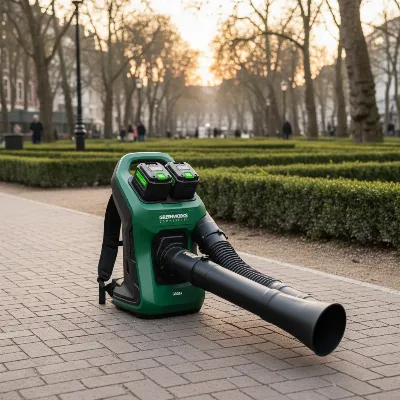 Greenworks Commercial BB361 battery-powered backpack leaf blower with its sleek design and dual-port battery system, in an urban landscaping setting
The Greenworks Commercial BB361 is at the forefront of battery-powered innovation, proving that electric blowers can deliver formidable commercial-grade performance. This model is a game-changer for professionals seeking powerful, eco-friendly, and quiet alternatives to gas-powered machines, especially in areas with noise and emission regulations. With its advanced battery technology and robust motor, it offers a compelling blend of power and environmental responsibility.
Key Specs:
- Motor: 82V brushless
- Air Volume: 755 CFM
- Air Speed: 225 MPH
- Blowing Force: 36 Newtons
- Weight (bare): 14.9 lbs
- Weight (with 2x8Ah batteries): 31.9 lbs
- Runtime (with 2x8Ah batteries): Up to 63 minutes on low, 30 minutes on high, 25 minutes on turbo.
Pros:
- Zero Emissions & Quiet Operation: Ideal for noise-sensitive areas and environmentally conscious operations.
- Powerful Performance: Delivers substantial blowing force, comparable to many mid-range gas models.
- Low Maintenance: Offers 1000 hours of maintenance-free operation.
- IOT Enabled: Allows connectivity with the Greenworks Commercial Fleet app for monitoring.
Cons:
- Runtime is limited by battery capacity, requiring additional batteries for extended workdays.
- The total weight with multiple batteries can be comparable to, or even exceed, some gas models.
- Higher initial investment due to the cost of batteries and charger.
How to Use and Maintain Your Commercial Backpack Leaf Blower
Proper usage and consistent maintenance are crucial for maximizing the lifespan, efficiency, and safety of your commercial backpack leaf blower. Adhering to these guidelines will ensure your equipment remains a reliable workhorse for years to come.
Safe Operation
Safety should always be the top priority. Always wear appropriate personal protective equipment (PPE), including eye protection, hearing protection, and sturdy gloves. Ensure your work area is clear of people, pets, and fragile objects before starting. Be mindful of your surroundings to avoid accidental damage or injury. Adjust the harness system to fit snugly and comfortably, distributing the blower’s weight evenly across your back and hips to minimize strain.
Gas Blower Maintenance
Gas-powered blowers require more frequent and specific maintenance due to their combustion engines.
- Fuel Management: Always use fresh fuel, mixed with the correct ratio of 2-stroke oil if required by your model. Stale fuel can cause engine issues.
- Air Filter: Clean or replace the air filter regularly (daily or weekly, depending on conditions) to ensure optimal engine performance and prevent debris from entering the engine.
- Spark Plug: Inspect and clean the spark plug periodically. Replace it if it shows signs of wear or fouling.
- Fuel Filter: Check and replace the in-tank fuel filter as needed to prevent contaminants from reaching the carburetor.
- General Checks: Regularly inspect for loose screws, damaged hoses, or worn components. Follow the manufacturer’s recommendations for seasonal tune-ups.
Battery Blower Maintenance
While battery-powered blowers require less engine-related maintenance, proper battery and motor care are essential.
- Battery Care: Store batteries in a cool, dry place and follow manufacturer guidelines for charging. Avoid fully discharging batteries and then leaving them uncharged for long periods.
- Connections: Keep battery terminals and charger contacts clean and free of debris.
- Motor & Fan: Periodically check the blower’s intake screen and fan for any debris buildup that could impede airflow or strain the motor.
- General Care: Wipe down the blower after each use to remove dirt and dust. Inspect for any damage to the housing or controls.
Environmental Considerations for Leaf Blower Use
As landscape professionals, we have a responsibility to minimize the environmental impact of our operations. Thoughtful use of leaf blowers can significantly contribute to this goal.
One major consideration is noise pollution. Gas blowers, particularly older models, can be very loud, disrupting communities and potentially harming operator hearing. Where possible, choose quieter models, especially battery-powered ones, and adhere strictly to local noise ordinances regarding operating hours.
Another critical aspect is emissions. Gas-powered blowers, especially 2-stroke engines, release pollutants into the atmosphere. Opting for 4-stroke gas blowers or, even better, battery-powered alternatives can drastically reduce your carbon footprint and improve local air quality.
Finally, consider debris disposal. Instead of sending all collected leaves to landfills, explore options for composting them on-site or at designated facilities. This not only reduces waste but also creates valuable organic material that can enrich soil. Using leaf blowers efficiently to consolidate debris rather than scatter it broadly also helps manage particulate matter and dust.
Conclusion
Choosing the right commercial backpack leaf blower is an investment in your business’s efficiency, productivity, and the well-being of your crew. The market in 2026 offers exceptional gas-powered machines like the RedMax EBZ 9000, Stihl BR 800 C-E Magnum, Echo PB-9010T, and Husqvarna 360BT, which deliver raw power and extended runtime for demanding tasks. Simultaneously, advanced battery-powered options such as the Greenworks Commercial BB361 provide powerful, quieter, and eco-friendly alternatives for an increasingly regulated and environmentally conscious industry.
By carefully assessing your specific commercial needs, understanding key performance metrics like CFM, MPH, and Newtons, and prioritizing comfort and durability, you can select a blower that not only meets but exceeds your expectations. With proper maintenance and mindful operation, your chosen leaf blower will be a reliable partner in achieving professional results for years to come. What kind of challenging debris will your new commercial backpack Leaf Blower tackle first?
Frequently Asked Questions
What is the most powerful commercial backpack leaf blower?
While various models compete for the top spot, the RedMax EBZ 9000 is consistently cited for offering maximum airflow and overall productivity in 2026, making it ideal for the heaviest commercial workloads. The Echo PB-9010T also stands out with a very high blowing force.